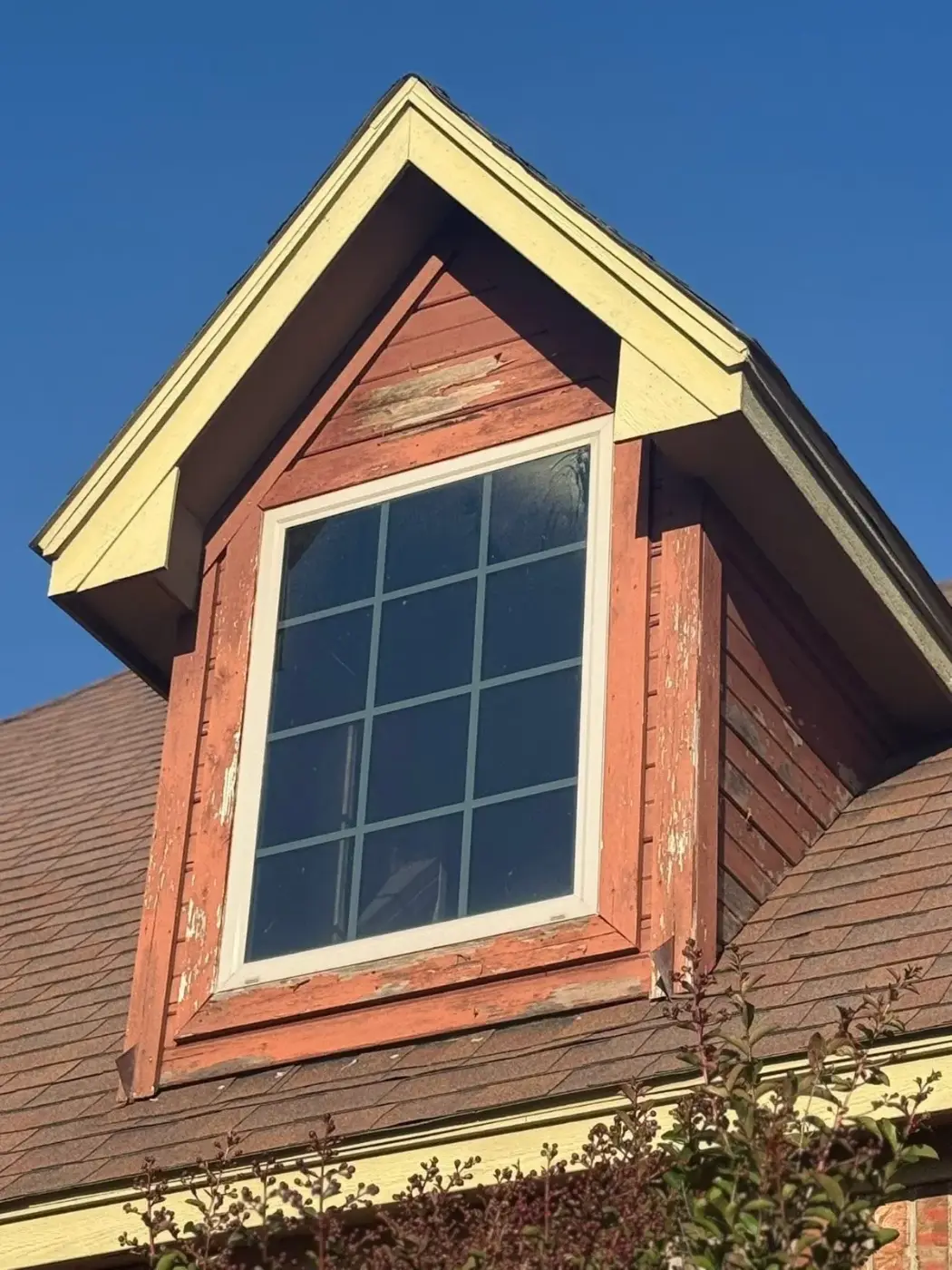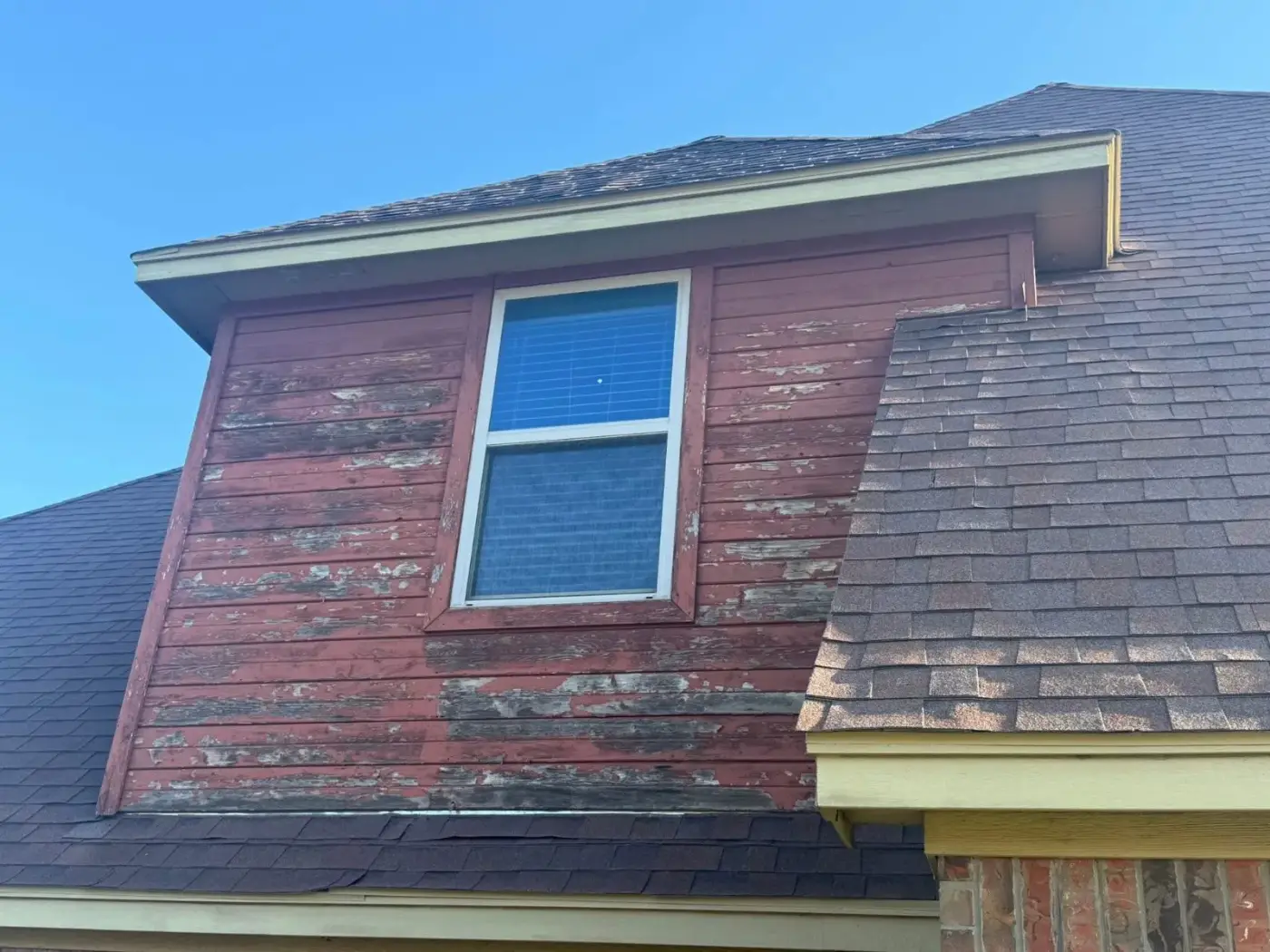
Exterior paint doesn't fail all at once. It fades a little each summer, chalks a little more each year, and then one spring you notice the trim is peeling and the front of the house looks tired. By the time most homeowners call us, the paint has been on its way out for a while.
Knowing the early signs helps you repaint at the right time. Too early and you're spending money you didn't need to. Too late and you're paying to fix wood rot, swollen siding or rust that good paint would have prevented. Here are the five signs we look for when we walk a house in Fort Worth, what each one means and how urgent it is.
1. Fading, especially on the sunny sides
Fading is usually the first thing homeowners notice. Colors look washed out, and the difference between the sunny and shady sides of the house gets more obvious every year. A dark blue front door turns gray-blue. A tan house turns pale and uneven.
What it means
UV light is breaking down the pigments and binders in the paint. In Fort Worth's sun, south and west walls fade fastest. Fading on its own doesn't mean the paint has stopped protecting the house, but it's a sign the coating is aging.
How urgent
Low to moderate. If fading is the only sign, you probably have a year or two. If it's paired with chalking or cracking, it's time to plan a repaint.
2. Chalky residue on the siding
Rub your hand across a sunny wall. If it comes away with a fine powder the same color as the paint, that's chalking.
What it means
Chalking is paint breaking down at the surface. A little is normal for older paint. Heavy chalking means the film is getting thin and losing its ability to shed water.
How urgent
Moderate. Heavy chalking is a sign you're near the end of the paint's life. It also has to be washed off completely before new paint goes on, or the new coat won't bond. That's part of why we always start with a thorough wash.
3. Cracking and flaking
Look closely at trim, window sills and siding joints. Fine cracks in the paint, sometimes in a pattern like alligator skin, mean the paint has lost its flexibility. Flaking is the next step, when small pieces start to lift and fall off.
What it means
The paint has dried out and become brittle. It can't move with the wood or siding as it expands and contracts in Texas heat. Once cracks open, water gets underneath.
How urgent
High. Cracked and flaking paint leads to peeling, and peeling leads to bare wood. On wood trim, that's how rot starts.
4. Peeling and blistering
Peeling is paint coming off in strips or sheets. Blistering is bubbles under the paint surface, which often break open and peel.
What it means
Usually moisture. Water is getting behind the paint through gaps, cracks or unsealed wood and pushing it off. Blisters can also come from paint applied in direct sun on a hot wall, where the surface dries before the paint underneath can bond. Peeling can also mean the previous coat was put over dirt, chalk or glossy paint without proper prep.
How urgent
High. Peeling paint isn't protecting the surface anymore. The longer it's left, the more prep and repair the next job needs. If peeling shows up in the same spots again and again, there's likely a moisture source to fix first, like a leaking gutter, a sprinkler hitting the wall or a gap in the caulk.
5. Gaps, rot and damage underneath
This is the sign that paint has been left too long. Look for soft or crumbly wood on trim, fascia and window sills. Check for gaps where caulk has pulled away from windows and doors. Look for rust on metal railings and garage doors, and cracks in stucco.
What it means
Water has been getting past the paint for a while and has started damaging the material itself.
How urgent
Very high. At this point the job involves repairs as well as paint. Rotted wood has to be replaced, rust has to be removed and primed, and stucco cracks have to be patched. Our exterior trim painting and stucco painting and repair pages explain how we handle that work.
How to check your house in 15 minutes
You don't need a ladder for a first look. Walk around your house on a sunny day and check each side.
Take photos as you go. They help you track changes over time, and they're useful if you want a quote.
What it costs to repaint
Exterior repaints in Fort Worth start around $3,000. Most homes fall between $4,500 and $12,000, depending on size, siding type, how many stories and how much repair is needed. A house with fading and chalking is at the lower end of that range for its size. A house with peeling and rot needs more prep and repair, which adds to the cost.
That's the main reason to repaint on time. The paint itself costs about the same either way. Waiting adds repair work.
Can you just touch it up?
Sometimes. If damage is limited to one area and the rest of the paint is in good shape, a targeted repair can buy a few years. Our post on signs your house paint needs a touch-up or replacement explains how to tell the difference. But touch-ups on faded paint rarely blend, so if the whole house is showing age, a full repaint usually looks and lasts better.
How often to expect this in North Texas
On most homes around Fort Worth, siding needs repainting every 7 to 10 years and trim every 5 to 7 years. Homes with lots of sun, wood siding or dark colors are on the shorter end. See how often to paint your house exterior in North Texas for more detail.
Things that look like paint problems but aren't
Some issues show up on painted surfaces but start somewhere else. It's worth knowing them so you fix the real cause.
When we see one of these on a walkthrough, we'll point it out and tell you whether to fix the cause before we paint.
Why waiting costs more
Every year a failing paint job stays on the house, the next job gets bigger. Bare wood takes on water, swells and splits. Rust spreads under the paint on steel. Caulk gaps let water behind siding. On a typical Fort Worth home, the difference between repainting on time and waiting three more years can be several hundred to a few thousand dollars in carpentry and repair before painting can even start. That's the real cost of waiting, and it's why we'd rather tell you honestly when it's time.
Questions to ask when you get quotes
Not every exterior quote covers the same work. Ask each painter what prep is included, whether they'll replace rotted wood or just paint over it, which products they'll use, how many coats, and whether there's a written warranty. A lower price often means less prep, and less prep means the paint fails sooner. We list all of that on our written estimates so you can compare.
What we look for on a walkthrough
When we come out for an estimate, we do the same walk you just did, with a ladder and a moisture meter where it helps. We'll show you what we see, tell you honestly whether it's time to repaint or whether you can wait, and give you a written quote if you want one.
If you're seeing two or more of these signs, call or text (817) 214-7475 or request a free estimate. Learn more about our exterior painting services.
Spotting these signs on wood? Our siding painting and exterior trim painting crews fix the underlying damage before repainting.
Want a professional opinion? Bearcat Painting offers free, written estimates across Greater Fort Worth. Schedule yours online or call (817) 214-7475.
Bearcat Painting is based in Aledo and works with homeowners across Greater Fort Worth, including Benbrook, Hudson Oaks, Fort Worth, Keller and Granbury. See all areas we serve.