If you're planning concrete staining in Fort Worth, the first decision is the stain itself: acid stain or water-based stain. Both color the concrete instead of coating it, so neither peels like paint. But they look different, behave differently on older slabs and suit different patios. This post explains how each one works, how they compare on looks, cost and upkeep, and how to choose for a North Texas backyard.
How acid stain works
Acid stain is a reactive stain. Metallic salts in a mild acid solution react with the lime in the concrete and permanently change its color. The color isn't sitting on top. It's part of the surface.
Because every slab has a slightly different makeup, the result is mottled and variegated. Some areas take color deeper than others. Trowel marks, aggregate and small variations in the concrete all show through. That's the marbled, natural-stone look many people picture when they think of stained concrete.
Colors
Acid stain comes in a limited palette of earth tones: browns, tans, terracotta, amber and a blue-green patina. You can layer two colors for more depth, but you can't get crisp grays, blacks or bright colors.
The process
After the slab is cleaned, the acid stain is sprayed or brushed on and left to react. Once the reaction is done, the residue has to be neutralized and rinsed thoroughly. That step matters. Leftover residue can keep the sealer from bonding. After the slab dries, a sealer goes on top.
How water-based stain works
Water-based stain is a penetrating, non-reactive stain. Fine pigments soak into the surface pores rather than reacting with the concrete, so the color is more even and predictable.
Colors
The range is much wider than acid stain, including modern charcoals, slate grays, sandstone and almost any custom tint. Colors can be mixed to match your house, pavers or stone.
The process
After cleaning, the stain is sprayed or applied in coats until the color is right. There's no reaction and no neutralizing step. Once it's dry, a sealer goes on top.
Older concrete
Because it doesn't depend on a chemical reaction, water-based stain works on concrete that won't react well to acid, including older and patched slabs.
Which looks better on a Fort Worth patio?
It depends on the house.
Acid stain's warm, uneven tones pair well with the brick ranch homes and stone accents common across Tarrant and Parker County. A tan or amber acid stain next to red brick and native stone looks natural and settled.
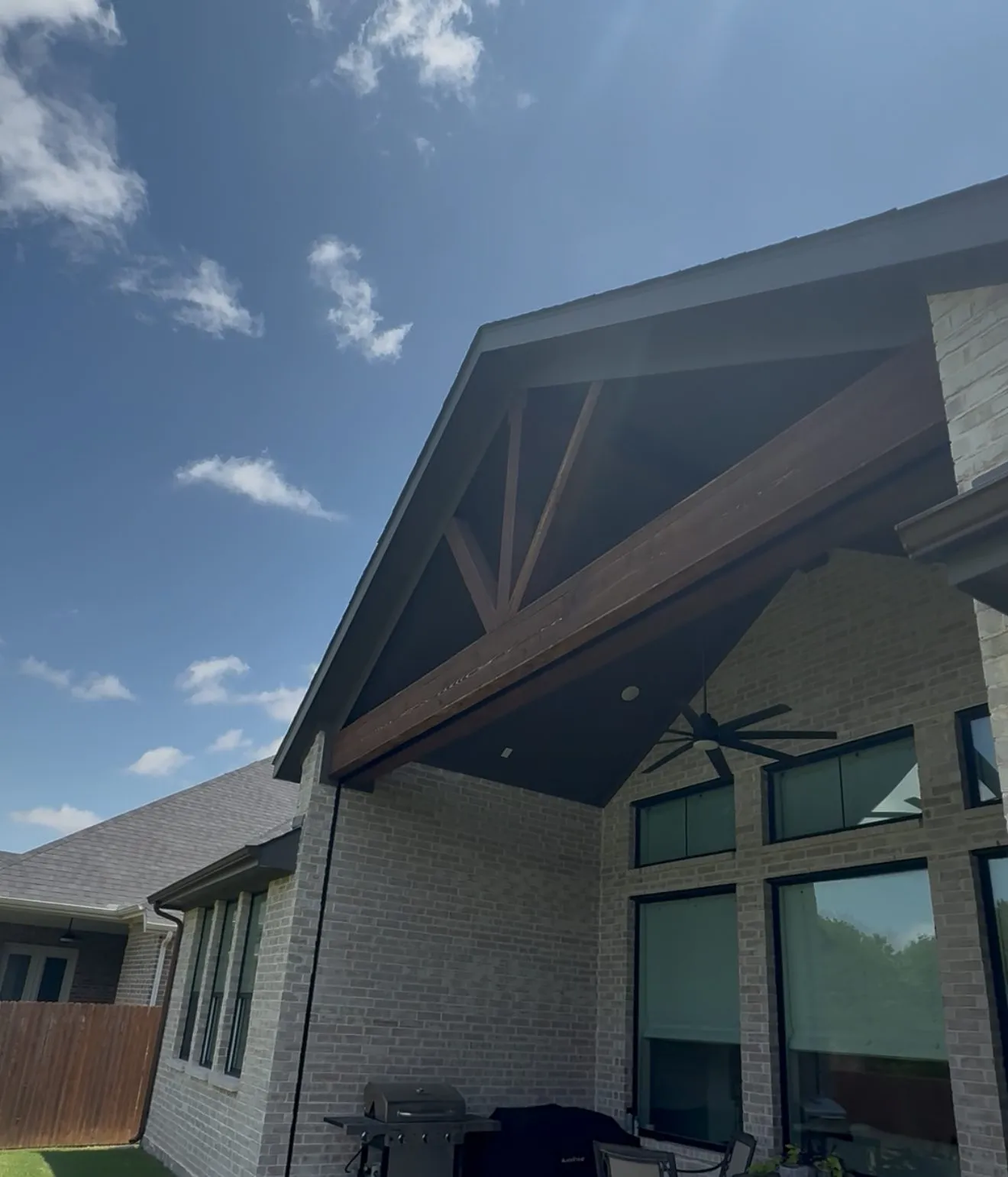
Water-based stain suits newer builds with gray or white exteriors, black windows and clean-lined landscaping. A charcoal or slate gray patio looks right next to a modern farmhouse or a contemporary home in Walsh or north Fort Worth.
On pool decks, lighter tones such as sandstone stay noticeably cooler underfoot in July and August than dark charcoal or espresso. If the slab is around a pool or gets full afternoon sun, think about bare feet before choosing a dark color.
Older and patched concrete
Acid stain needs fresh lime in the concrete to react. Very old, heavily weathered or patched slabs can react unevenly, and patches often show as a different shade. Sometimes that's part of the charm. Sometimes it looks blotchy.
Water-based stain is more forgiving on older concrete and repairs. It can even out the look of a slab with patches or past repairs.
Either way, any old sealer or paint must be stripped first. Stain can't soak through an existing coating. That stripping step is one of the biggest variables in the cost of a concrete staining job.
A small test area on your slab is the only reliable way to preview the result. We do one on every job before staining the whole area.
Prep: where most of the result comes from
Whichever stain you choose, prep decides how good it looks.
Sealing
The stain is permanent. The sealer on top is what protects it and what wears. Sealer:
Outdoors in North Texas sun, sealer usually needs a fresh coat every 2 to 3 years. Sealers come in different sheens, from matte to glossy. Glossy sealers look rich but can be slippery when wet, so on pool decks and walkways we add a slip-resistant additive.
Cost and upkeep
In Fort Worth, concrete staining typically runs $2 to $6 per square foot. A typical patio starts around $900, and most patios fall between $1,200 and $2,400. Pool decks usually run $2,500 to $6,000.
Acid stain can cost a little more because of the neutralizing and rinsing step. Heavy cleaning or stripping adds to either.
Upkeep is the same for both: the stain is permanent, but the sealer wears and needs to be refreshed every 2 to 3 years outdoors. Between resealing, sweep regularly, rinse with water and clean spills quickly.
Quick comparison
Where each one works best
Back patios
Either works. Choose based on your house style and how much variation you like.
Pool decks
Lighter colors stay cooler. Use a slip-resistant sealer. Water-based stain gives you more control over a light, even tone.
Front walkways and porches
These are part of curb appeal. Match the stain to your brick, stone or siding color.
Driveways
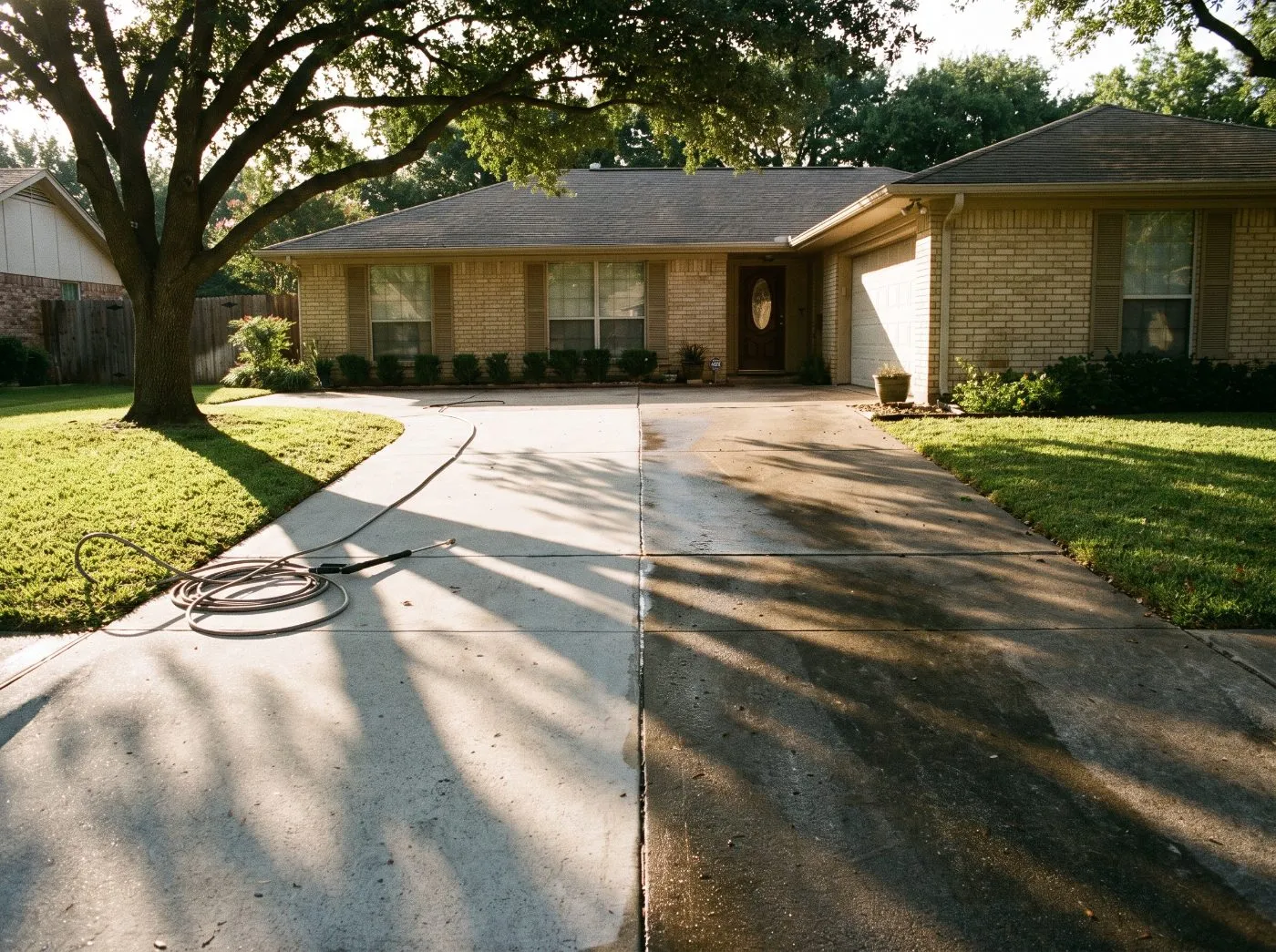
Driveways take vehicle traffic, oil and hot tires. Staining can work, but sealers wear faster. Talk to us about whether staining makes sense for your driveway.
Garages
Garage floors take vehicle traffic, hot tires and chemicals. A coating like epoxy flooring is usually the better option.
Interior concrete floors
Both stains work indoors. Interior floors get a different sealer and sometimes a wax or polish coat.
When staining isn't the right choice
Timing in North Texas
Concrete staining needs dry weather and moderate temperatures. Spring and fall are ideal. Summer works with early starts, since hot slabs make stain and sealer dry too fast. Winter is harder because concrete holds cold. Rain in the forecast means rescheduling.
Questions we hear about staining
Will stain hide cracks?
No. Stain colors the concrete but doesn't fill or cover cracks. Cracks can be filled before staining, and the filler may take color a little differently than the slab around it.
Can I stain new concrete?
Yes, but new concrete needs time to cure first, usually around a month. Staining too soon can lead to uneven color.
Will my stained patio fade?
The stain itself is very colorfast. What fades and wears is the sealer, which is why resealing every 2 to 3 years keeps the color looking deep.
Can you change the color later?
Water-based stain can sometimes be darkened with another coat. Acid stain is permanent, though you can go darker over it. Going lighter usually isn't possible with either.
How we handle a staining job
Most patio jobs take two to four days, depending on size, stripping and weather. Day one is cleaning and stripping. Then the slab dries. We do a test area, you approve the color and we stain. After the stain is dry, we seal. You can usually walk on the patio within a day of sealing and put furniture back within a few days.
Not sure which stain fits your concrete?
We test your color on a small, hidden area before the full job, so you see the real result on your own slab. See our Fort Worth concrete staining service for pricing and process, or call or text (817) 214-7475 to request a free estimate.
Not sure which stain fits your concrete? We test your color on a small, hidden area before the full job, so you see the real result on your own slab. See our Fort Worth concrete staining service for pricing and process.
Quick comparison
Whichever you choose, most of the result comes from prep. A deep clean, crack repair and the right sealer. If the concrete is in a garage or takes vehicle traffic, a coating such as epoxy flooring may be the better option.
Ready to stain? See concrete staining, or epoxy flooring for garages that need a tougher coating.
Bearcat Painting is based in Aledo and works with homeowners across Greater Fort Worth, including Burleson, Keller, Colleyville, North Richland Hills and Willow Park. See all areas we serve.