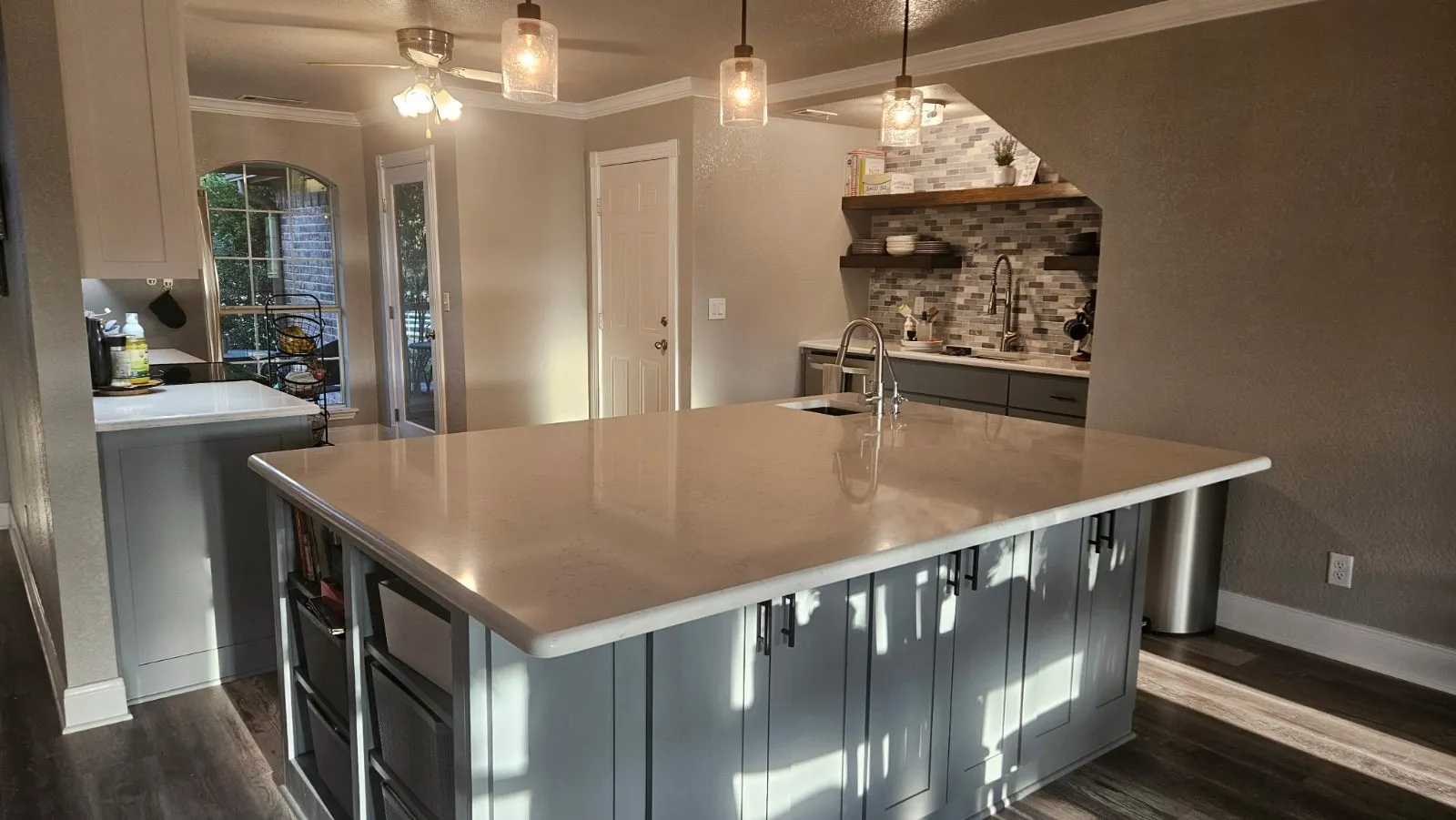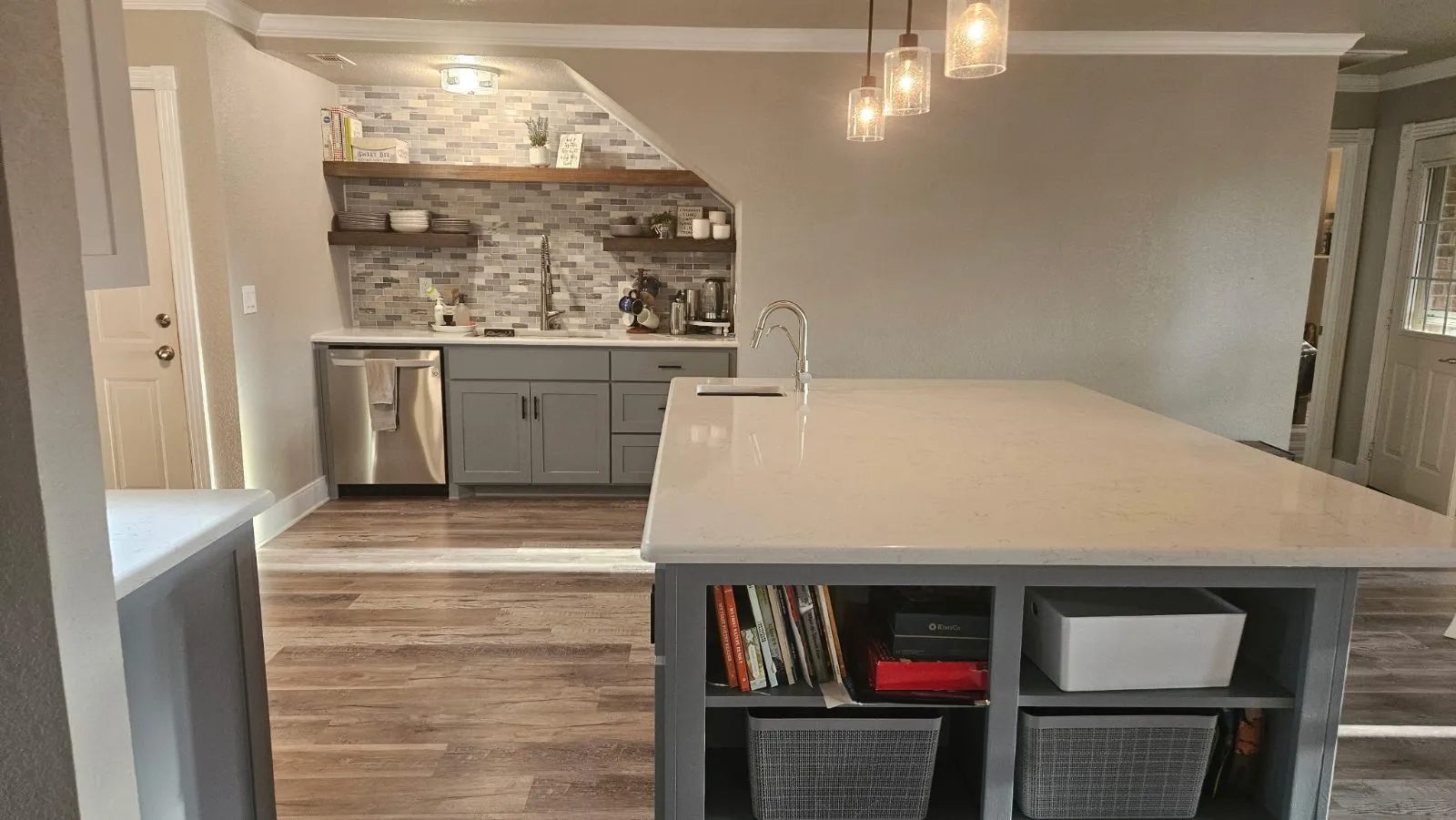
Fort Worth's climate is hard on a lot of things in a house, but kitchen and bathroom cabinets have it easier than most. They live indoors, in air-conditioned rooms, away from the sun, hail and rain that wear down exterior paint. That makes cabinets one of the best candidates for paint in North Texas. With the right prep and products, painted cabinets here hold up for many years.
There are a few local factors to plan for, though. Humid summers, dry winters, homes that sit empty during the day with the AC set high, west-facing kitchens with strong afternoon sun and older homes with oak cabinets all affect how cabinets should be painted. This post covers how Fort Worth's climate affects painted cabinets and how we handle it.
Why cabinets are a good fit for paint here
They're indoors
Most of what shortens paint life in North Texas is outside: UV, heat, hail, rain and temperature swings. Cabinets avoid nearly all of it.
Homes are climate-controlled
Air conditioning runs most of the year in Fort Worth. That keeps indoor temperature and humidity fairly steady, which is good for wood and paint.
Modern cabinet enamels are tough
Waterborne urethane and alkyd enamels like Sherwin-Williams Emerald Urethane Trim Enamel cure hard, level out smooth and resist chipping. They hold up to daily use when applied over proper prep.
Painting beats replacing
Cabinet painting costs a fraction of replacement, takes about a week and keeps solid wood cabinets in place. In a market where many homes have solid but dated cabinets, it's one of the best-value updates available.
Local factors to plan for
Humidity swings
Fort Worth summers can be humid, especially in late spring and early summer. Winters are drier. Wood expands slightly in humid months and shrinks in dry months. On painted cabinets, that movement can show up as hairline cracks at the joints where a door's center panel meets its frame.
How we handle it: we use flexible primers and enamels, avoid filling the joints of five-piece doors with rigid filler and paint in conditions that let the finish cure properly. A small hairline at a panel joint is normal wood movement, not a paint failure.
Kitchen humidity and grease
Cooking adds steam and grease to the air, especially around the range and dishwasher. Grease is the biggest threat to cabinet paint, because paint won't bond to it.
How we handle it: we degrease every surface thoroughly before sanding and priming. Areas around the stove and above the range get extra attention.
Bathroom moisture
Bathrooms see steam from showers and splashing at the sink. Vanities near tubs and showers take the most moisture.
How we handle it: thorough cleaning, a bonding primer and a durable enamel. We also recommend running the exhaust fan during and after showers. See bathroom vanity painting.
Sun through windows
West-facing kitchens get strong afternoon sun. Over years, UV through windows can fade some colors and yellow some finishes.
How we handle it: modern waterborne enamels resist yellowing better than older oil-based paints. If your kitchen gets a lot of direct sun, we'll talk about colors that hold up and window treatments that help.
Homes with the AC set high
Many homes sit warmer during work hours to save energy. Big temperature swings inside are hard on any finish.
How we handle it: during the job, we ask that the house stay in a normal range, about 65 to 78 degrees, so the paint cures properly. After that, normal temperature settings are fine.
Oak and tannin bleed
Many Fort Worth homes from the 1980s through early 2000s have oak cabinets. Oak has open grain and tannins that can bleed through light paint, showing up as yellow or brown spots.
How we handle it: a stain-blocking primer on oak and other tannin-rich woods. If you want a smooth finish without visible grain, we can apply a grain filler before priming.
What makes painted cabinets last here
Our post on the best paint types and finishes for cabinets covers products in detail.
Best time of year to paint cabinets in Fort Worth
Cabinets can be painted any time of year, since the work happens indoors. A few things to consider:
Our post on what you can paint during North Texas winter months covers indoor winter projects.
Kitchens across Fort Worth
1980s and 1990s homes
Common in Hurst, Bedford, Benbrook and many established Fort Worth neighborhoods. Often oak cabinets in good structural shape. Great candidates for paint.
Early 2000s builds
Common in Keller, Southlake, Mansfield and north Fort Worth. Often cherry, maple or stained cabinets with raised panels. Paint and refinishing both work.
Newer builds
Common in Aledo, Walsh and Haslet. Often builder-grade painted or stained cabinets. Repainting changes the color or upgrades a builder finish.
Historic homes
In neighborhoods like Fairmount and Ryan Place, original or older custom cabinets may have multiple layers of old paint and possibly lead paint. Those need careful prep.
Painting versus replacing in Fort Worth
If your cabinet boxes are solid and you like the layout, painting is usually the better value.
Care tips for Fort Worth kitchens
Refinishing instead of painting
If you love the look of wood, refinishing or restaining may be a better fit. It's affected by the same climate factors and needs the same care. See cabinet refinishing and staining.
What hairline cracks mean
Homeowners sometimes notice a thin line on a painted cabinet door after the first summer or winter. On five-piece doors, which have a separate center panel inside a frame, that line almost always appears where the panel meets the frame. It's the wood moving with seasonal humidity, not the paint failing. Solid wood panels are designed to float a little so they don't crack.
We don't fill those joints with rigid filler, because it would crack anyway and could split the paint around it. A flexible caulk can soften the look on some doors. Slab doors and MDF doors don't have this issue, since they don't have a floating panel.
If you see peeling, chipping or flaking paint, that's different. Paint failures from how we prepped or applied it are covered by our warranty.
Questions to ask before painting cabinets
We'll answer all of that at the estimate and put the products in writing.
Bathroom vanities in North Texas homes
Bathroom vanities face more moisture than kitchen cabinets, and Fort Worth homes add a few twists. Many primary bathrooms have large garden tubs and walk-in showers that put a lot of steam into the room. Older homes often have weak or noisy exhaust fans that homeowners don't run. And vanity bases sit right below the sink, where small leaks and drips go unnoticed.
Before we paint a vanity, we check the bottom of the sink base for soft or swollen particleboard. If it's damaged, we'll repair or replace that panel first so the new paint isn't going over a problem. After painting, the best thing you can do is run the fan during and after showers and fix any drip under the sink right away.
What it costs
Kitchen cabinet painting in Greater Fort Worth starts around $2,500. Most kitchens fall between $3,500 and $7,500, depending on size, condition, color change and finish. Estimates are free and in writing, and we can often quote from photos.
Learn more about kitchen cabinet painting or call or text (817) 214-7475 to request a free estimate.
See kitchen cabinet painting and bathroom vanity painting for how we handle humidity-prone rooms.
Want a professional opinion? Bearcat Painting offers free, written estimates across Greater Fort Worth. Schedule yours online or call (817) 214-7475.
Bearcat Painting is based in Aledo and works with homeowners across Greater Fort Worth, including Hudson Oaks, Fort Worth, Keller, Willow Park and Colleyville. See all areas we serve.