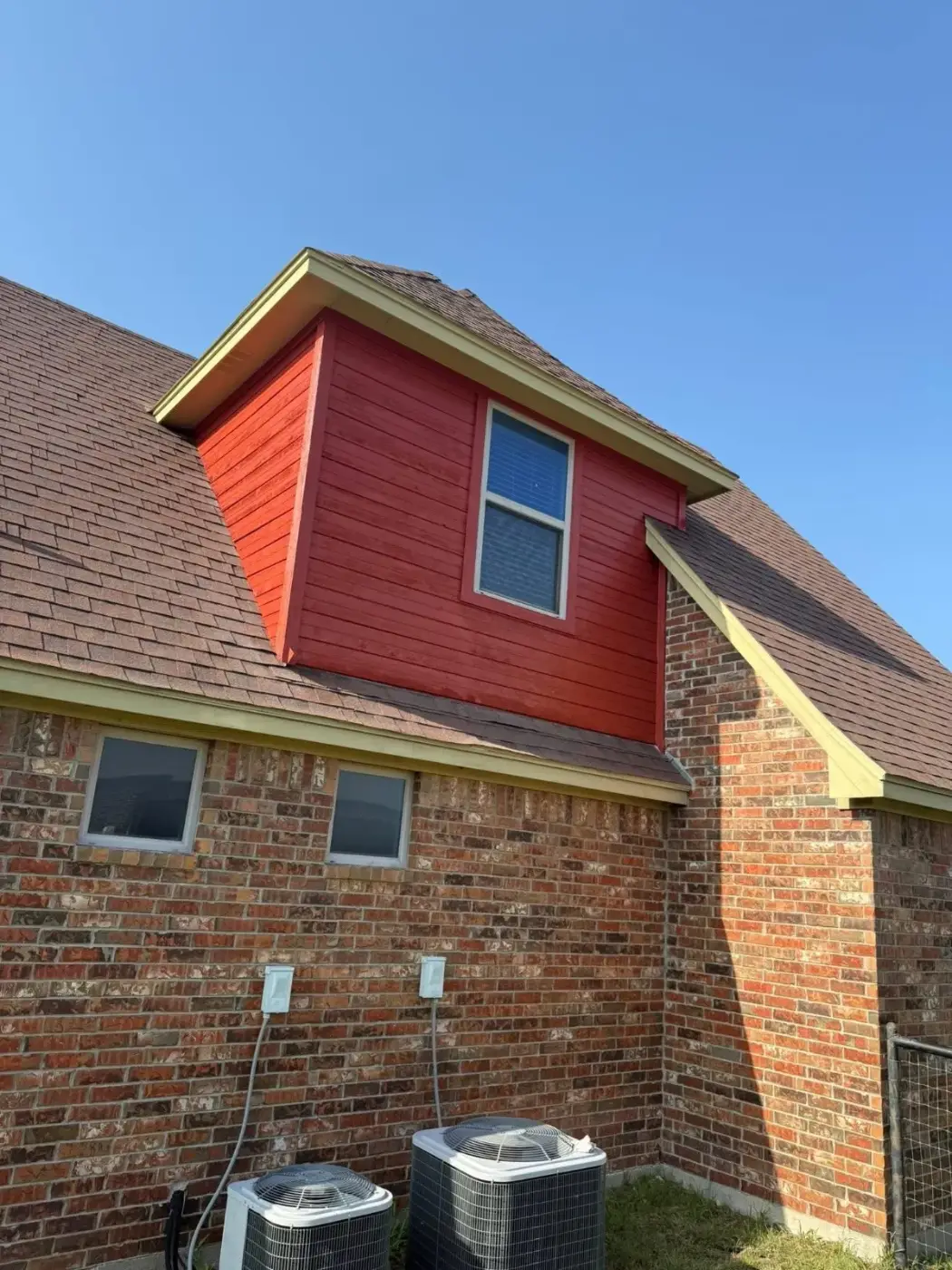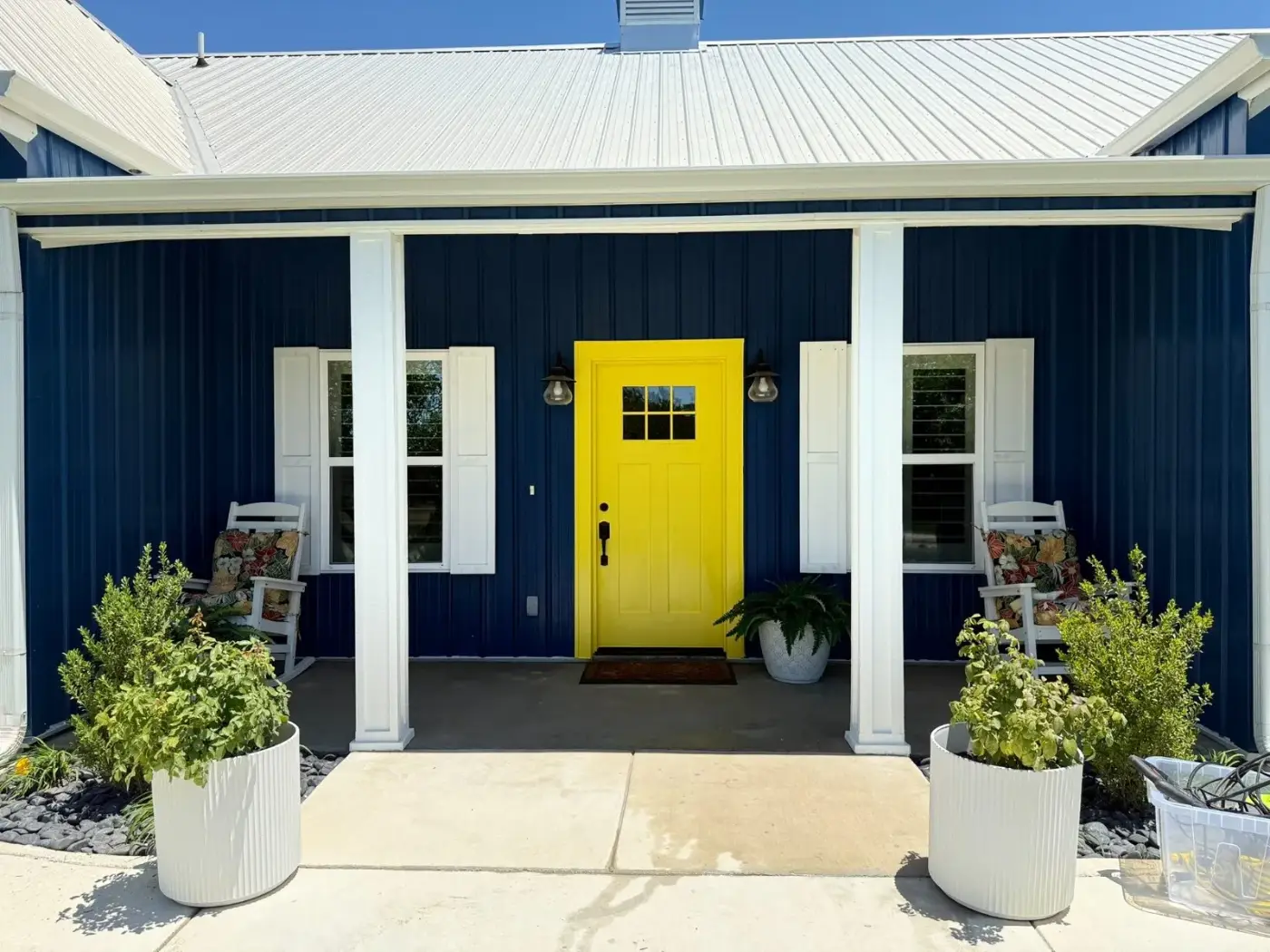
The best exterior paint for a North Texas house depends on what it's going on. Siding, trim, brick, stucco, metal and wood fences all need something different, and the paint that works beautifully on fiber cement can fail on brick or peel off a steel railing. What every surface here has in common is the climate: strong sun most of the year, summer heat over 100 degrees, spring hail and big temperature swings. The paint has to handle all of that.
This post is organized by surface. For each one, we'll tell you what kind of product works here, what we typically use on Fort Worth homes and what to avoid. If you want a comparison of specific product lines, see our post on the top exterior paints for Fort Worth homes. For a plain explanation of paint types, see the best house paint types for North Texas weather.
What every exterior paint needs here
Before we get into surfaces, here's what we look for in any exterior paint for North Texas.
Price matters less than people think. The difference between a mid-range and premium paint on a typical house is a few hundred dollars in material. The difference in how long it lasts can be several years.
Fiber cement siding
Fiber cement, like James Hardie, is common on newer homes around Aledo, Walsh, Keller and Mansfield. It's stable and holds paint well.
What works
A premium 100% acrylic exterior paint. On most fiber cement jobs we use Sherwin-Williams Duration or Emerald exterior, or a comparable Benjamin Moore exterior line. Satin or low-luster sheen sheds dirt and looks good on lap siding.
What to watch for
Cut edges and nail holes need to be sealed. If boards were factory-finished, we check that the new paint is compatible with the existing finish. See siding painting.
Wood siding
Wood siding shows up on older homes in Fort Worth neighborhoods like Fairmount, Arlington Heights and Ryan Place, and on many rural homes in Parker and Wise County.
What works
A good primer on bare wood, then two coats of a flexible 100% acrylic exterior paint. On stained or tannin-heavy woods like cedar and redwood, we use a stain-blocking primer so tannins don't bleed through.
What to watch for
Wood moves more than any other siding. End grain and bottom edges soak up water. Caulk every joint and seal every edge. Older homes may have lead paint under the current layers, which changes how we prep.
Brick
Brick doesn't need paint, but many homeowners choose to paint it for a new look or to cover mismatched brick.
What works
A breathable masonry coating or a mineral-based paint that lets moisture escape. Some homeowners prefer a limewash or masonry stain for a softer, more natural look. Our brick painting and treatments page explains the options.
What to avoid
Standard house paint on brick can trap moisture. That leads to peeling and can damage the brick face over time. Painted brick is also hard to undo, so it's worth thinking it through.
Stucco
Stucco is common across Fort Worth, from Mediterranean-style homes to newer builds with stucco accents.
What works
Masonry primer, then either a high-quality acrylic or an elastomeric coating. Elastomeric products are thick and stretchy, so they bridge hairline cracks. They're a good choice for stucco that moves with foundation shifts.
What to watch for
Elastomeric coatings don't breathe as much. On stucco with moisture problems, they can trap water. Cracks need to be patched first. See stucco painting and repair.
Wood trim, fascia and soffits
Trim takes the most abuse on a house. It's where water collects and where the sun hits hardest on edges and sills.
What works
A primer on bare wood, then two coats of a durable exterior paint in satin or semi-gloss. Semi-gloss is tougher and easier to clean. See exterior trim painting and soffit and fascia painting.
What to watch for
Rotted wood has to be replaced before painting. Fascia boards often rot from the back where you can't see. We check them closely on every job.
Front doors
Front doors are the most visible painted surface on a house and take daily handling.
What works
A durable exterior enamel in satin or semi-gloss. Many homeowners pick a bolder color here. On wood doors in full sun, consider whether paint or stain makes more sense. See door painting and door staining.
What to watch for
Dark colors on doors in full sun get very hot, which can affect the paint and some door materials. Check the door manufacturer's guidelines for dark colors.
Garage doors
Most garage doors around Fort Worth are steel, and some are wood.
What works
On steel, clean thoroughly, sand lightly, spot-prime bare metal with a metal primer, then two coats of exterior acrylic. On wood doors, treat it like wood trim. See garage door painting.
What to watch for
Dark colors on steel garage doors in full sun can cause panels to warp on some doors. Check the manufacturer's color guidance.
Metal railings and wrought iron
What works
Remove rust down to sound metal, apply a rust-inhibiting primer and finish with a direct-to-metal or exterior enamel paint. See wrought iron and metal painting.
What to watch for
Paint over rust fails fast. Rust keeps spreading under the coating. Prep is everything on metal.
Fences, decks and pergolas
What works
Most wood fences and decks around Fort Worth do best with a penetrating stain, not paint. Stain soaks into the wood and wears gradually instead of peeling. Semi-transparent and solid stains both work. See fence staining, deck staining and pergola and gazebo staining.
What to watch for
Horizontal surfaces like deck boards wear fastest. Plan to restain every 2 to 4 years.
Choosing a sheen
Sheen affects how paint looks and how it holds up.
Choosing color with the climate in mind
Light and mid-tone colors last longest in Texas sun. Dark colors absorb more heat, fade faster and can affect some siding and door materials. If you love a dark color, use it on the front door or shutters and keep the main body lighter. Our post on choosing paint colors for your North Texas home has more on this.
Why primer matters as much as paint
Many paints are labeled "paint and primer in one." Those work well over clean, previously painted surfaces in good shape. They don't replace a true primer on bare wood, metal, patched areas or stained spots. We spot-prime those areas on every job, and we use dedicated primers on cedar, metal and masonry.
Why the product isn't everything
Even the best exterior paint fails over bad prep. Dirt, chalk, loose paint, open caulk joints and rotted wood all shorten paint life no matter what's in the can. Timing matters too. Paint applied to a hot wall in direct sun or right before rain doesn't bond well. Our post on exterior painting that holds up to Fort Worth weather explains how product, prep and timing fit together.
How we pick products for your house
On every estimate, we look at each surface on your house and recommend products for it. Most Fort Worth homes have at least three: siding, trim and something else like brick, a garage door or a metal railing. We'll list each product on your written estimate so you know exactly what's going on your house. We work with Sherwin-Williams and Benjamin Moore, and we're a Sherwin-Williams PRO+ and Benjamin Moore contractor shop.
What it costs
Exterior repaints in Fort Worth start around $3,000, and most homes fall between $4,500 and $12,000 depending on size, surfaces, condition and products. Premium paints add a modest amount to the total and usually pay for themselves in longer life.
Every residential exterior job is covered by our 2-Year Warranty. Call or text (817) 214-7475, or request a free estimate. See our exterior painting services for more.
We match these products to each surface on our siding, stucco and brick projects.
Want a professional opinion? Bearcat Painting offers free, written estimates across Greater Fort Worth. Schedule yours online or call (817) 214-7475.
Bearcat Painting is based in Aledo and works with homeowners across Greater Fort Worth, including Colleyville, North Richland Hills, Willow Park, Benbrook and Hudson Oaks. See all areas we serve.