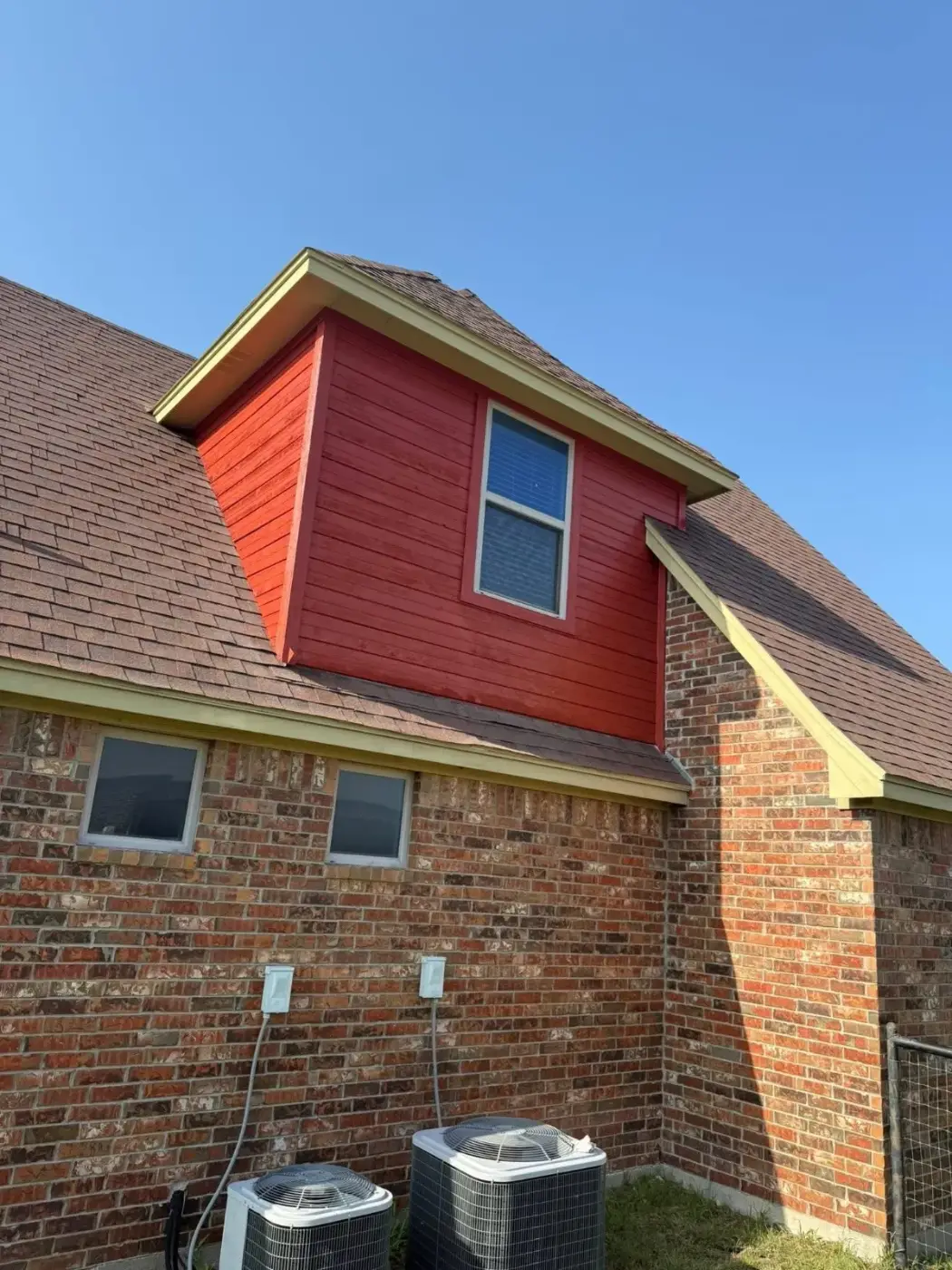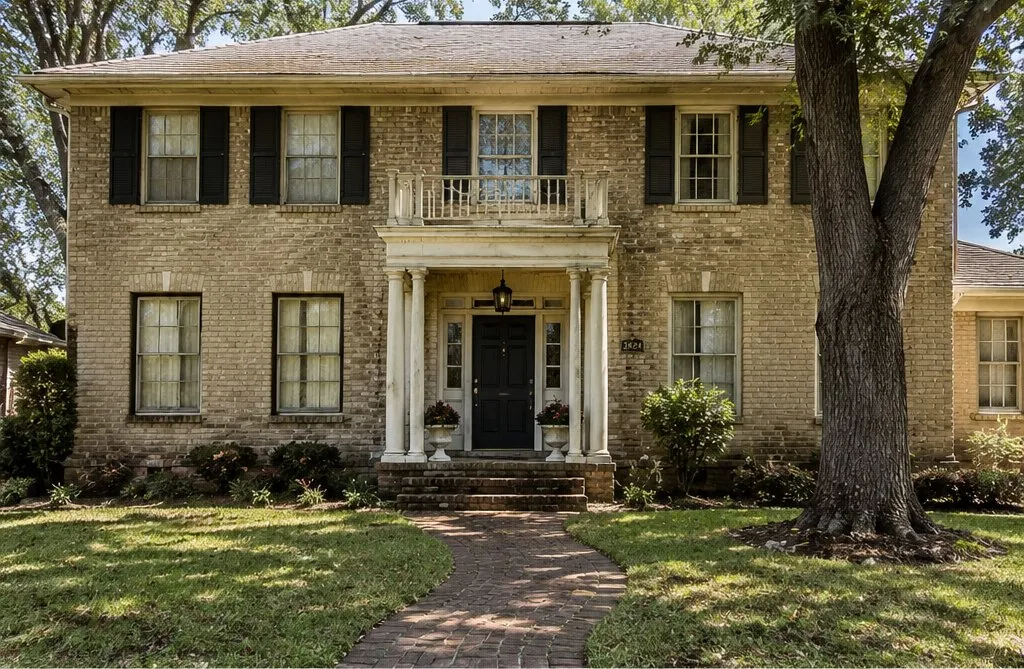
Fort Worth is hard on house paint. Summers push past 100 degrees, the sun is strong most of the year, spring brings hail and heavy rain, and a few times each winter the temperature drops below freezing overnight. Add clay soil that moves with the seasons and you've got a climate that tests every coat of exterior paint on your house.
Most of the early paint failures we see around Tarrant and Parker County don't come from bad luck. They come from paint that wasn't chosen for this weather, prep that was rushed, or work done at the wrong time of day. This post explains what makes exterior paint last here and what we do on every job to get the most years out of it.
How long exterior paint should last in Fort Worth
A good exterior paint job in North Texas usually lasts 7 to 10 years on siding and 5 to 7 years on trim. Stain on fences and decks lasts less, often 2 to 4 years. Those numbers move a lot depending on a few things:
If your last paint job failed in three or four years, it's almost always one of those factors, not the weather alone. Our post on how often to paint your house exterior in North Texas breaks down repaint cycles by material.
What Fort Worth weather does to paint
Heat and UV
Strong sun is the biggest enemy of exterior paint here. UV light breaks down the binders that hold paint together. Over time the surface turns chalky, colors fade and the film gets brittle. On west-facing walls that take the afternoon sun, we often see paint failing years before the rest of the house.
Temperature swings
In spring and fall, a wall can go from 45 degrees at dawn to 85 by mid-afternoon. Siding and trim expand and contract with those swings. Paint that isn't flexible enough cracks along joints and grain lines.
Hail and wind
Spring storms chip paint, split trim and open caulk joints. Once there's a break in the coating, water gets in. Our hail damage guide covers what to check after a storm.
Moisture
Rain itself isn't usually the problem. The problem is water that gets behind the paint through gaps, cracks or unsealed wood. It pushes the paint off from behind, which shows up as blisters and peeling. Sprinklers hitting the same wall every morning do the same thing.
Soil movement
Expansive clay soil is common around Fort Worth. As it shrinks in summer and swells when it rains, foundations shift a little. That can crack brick mortar, stucco and the caulk around windows. Paint can't stop the movement, but flexible caulk and coatings handle it far better than rigid ones.
Prep is where paint jobs succeed or fail
Paint is only as good as what it's stuck to. On every exterior job, a big share of our time goes into prep, because that's what decides whether the job lasts four years or ten.
Wash
We clean the whole house first. Dirt, pollen, mildew and chalky old paint keep new paint from bonding. Depending on the surface, we use pressure washing or a gentler soft wash. Then we let it dry fully before anything else happens.
Scrape and sand
Anything loose comes off. We scrape peeling paint back to a sound edge and sand rough spots so the new coat lies flat.
Repair
Rotted trim gets replaced, cracks in stucco get patched, and nail heads get set and filled. Painting over rot just hides it for a season.
Caulk
We re-caulk joints around windows, doors, trim and siding seams with a flexible, paintable caulk rated for exterior use. This is one of the most important steps in Texas, because those joints are where water gets in and where movement shows up first.
Prime
Bare wood, patched areas, metal and stained spots get primer. On masonry and stucco we use a primer made for masonry. Primer gives the finish coat something to grip and stops stains from bleeding through.
Our step-by-step exterior prep guide walks through each step in more detail.
Products that hold up here
Not all exterior paint is the same. For North Texas we stick to 100% acrylic exterior paints with strong UV resistance and good flexibility. On most homes that means Sherwin-Williams Duration or Emerald exterior, or a comparable Benjamin Moore exterior line. These cost more than entry-level paint, but they last noticeably longer on sun-baked walls.
A few product choices make a real difference:
For a deeper comparison of products, read the best exterior paint for North Texas houses.
Timing the work around the weather
When paint goes on matters almost as much as what goes on. Paint needs the right surface temperature and enough dry time before rain or dew.
We watch the forecast closely and will move a day rather than risk paint going on before a storm. See when is the best time to paint a house exterior in North Texas for a month-by-month view.
Small habits that extend the life of your paint
Once the job is done, a few things help it last:
Our post on how to extend the life of your paint job covers maintenance in more detail.
What we back in writing
Every residential exterior job we do comes with our 2-Year Warranty. If paint peels, blisters or chips because of how we prepped or applied it, we come back and fix it, with the labor on us. That's in writing. It also means we have every reason to do the prep right the first time.
Color choices that last longer in Texas sun
Color affects how long paint lasts more than most people expect. Dark colors absorb more heat. On a west wall in August, a dark charcoal or navy can get much hotter than a light tan or white. That extra heat speeds up fading and puts more stress on the paint film and on the siding underneath. Some vinyl and composite products even have limits on how dark they can be painted.
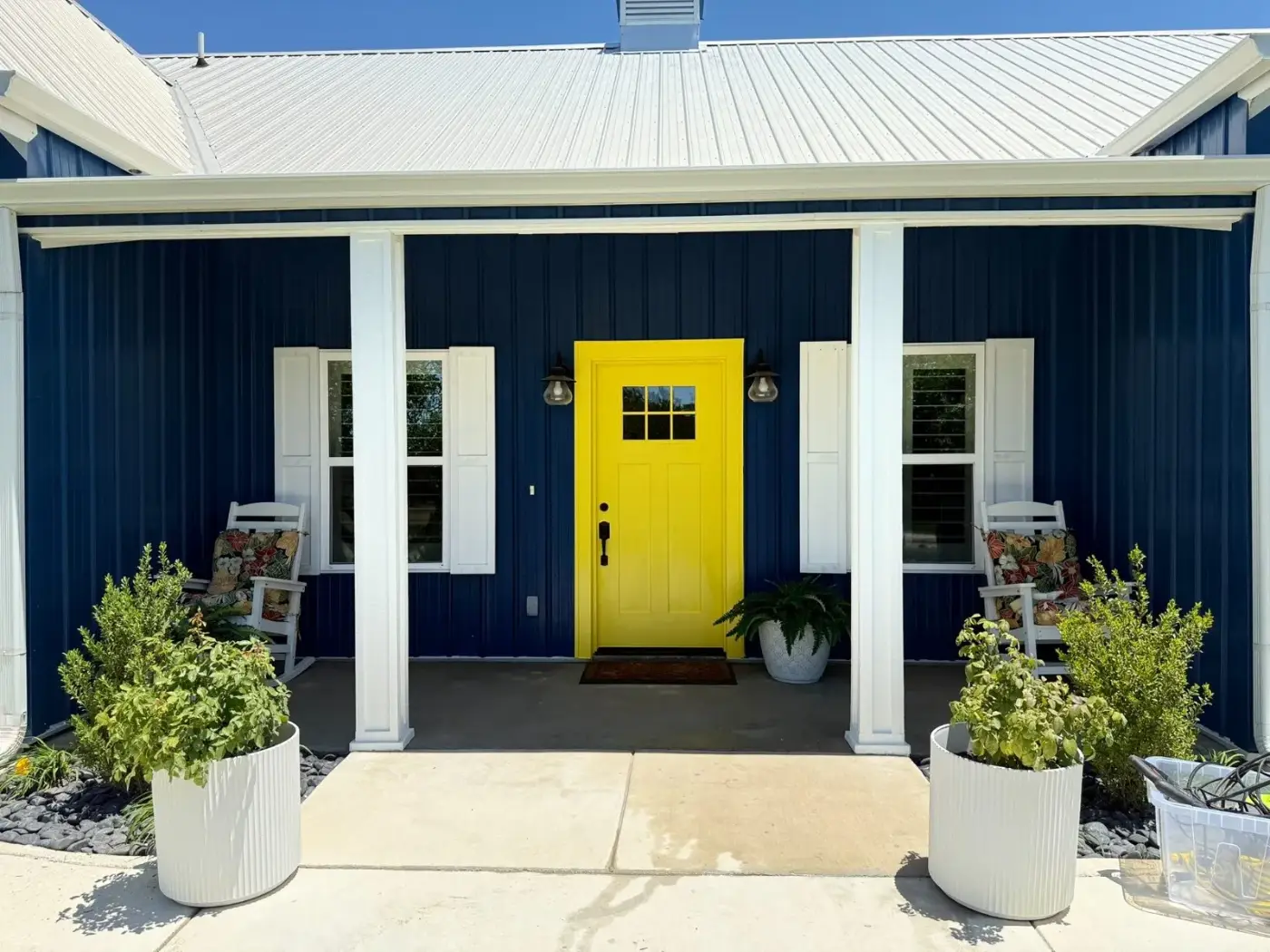
That doesn't mean you can't have a dark house. It means picking a high-quality paint with strong fade resistance, choosing colors the manufacturer rates for exterior use, and expecting the sunniest walls to need attention sooner. Light and mid-tone colors are the easiest to maintain here. If you love a dark color, consider using it on the front door, shutters or trim and keeping the main body lighter. Our post on choosing paint colors for your North Texas home has more on this.
Surface by surface: what we watch for
Each material on a Fort Worth house has its own weak spots.
Signs your paint job was done for this climate
If you're not sure whether your current paint was done well, look for a few things. Caulk lines should be smooth and continuous around windows and trim. Paint should cover the bottom edges of siding boards, not just the faces. Window sills should have a full, even coat. The sunny side should look a little faded after a few years, but it shouldn't be peeling. If you see peeling in the first three or four years, the problem was almost always prep, product or timing, and it's worth fixing those on the next job rather than repainting the same way.
Thinking about repainting?
If your paint is fading, peeling or chalking, or it's been more than seven or eight years, it's a good time to get a quote. Exterior repaints in Fort Worth start around $3,000, and most homes fall between $4,500 and $12,000 depending on size, surfaces and condition. We'll walk the house, tell you honestly what needs work and give you a written estimate for free.
Call or text (817) 214-7475, or request a free estimate. Learn more about our exterior painting services.
The same approach applies to soffits and fascia, stucco and metal railings.
Want a professional opinion? Bearcat Painting offers free, written estimates across Greater Fort Worth. Check our 80+ five-star Google reviews. Schedule yours online or call (817) 214-7475.
Bearcat Painting is based in Aledo and works with homeowners across Greater Fort Worth, including Aledo, Southlake, North Richland Hills, Burleson and Benbrook. See all areas we serve.