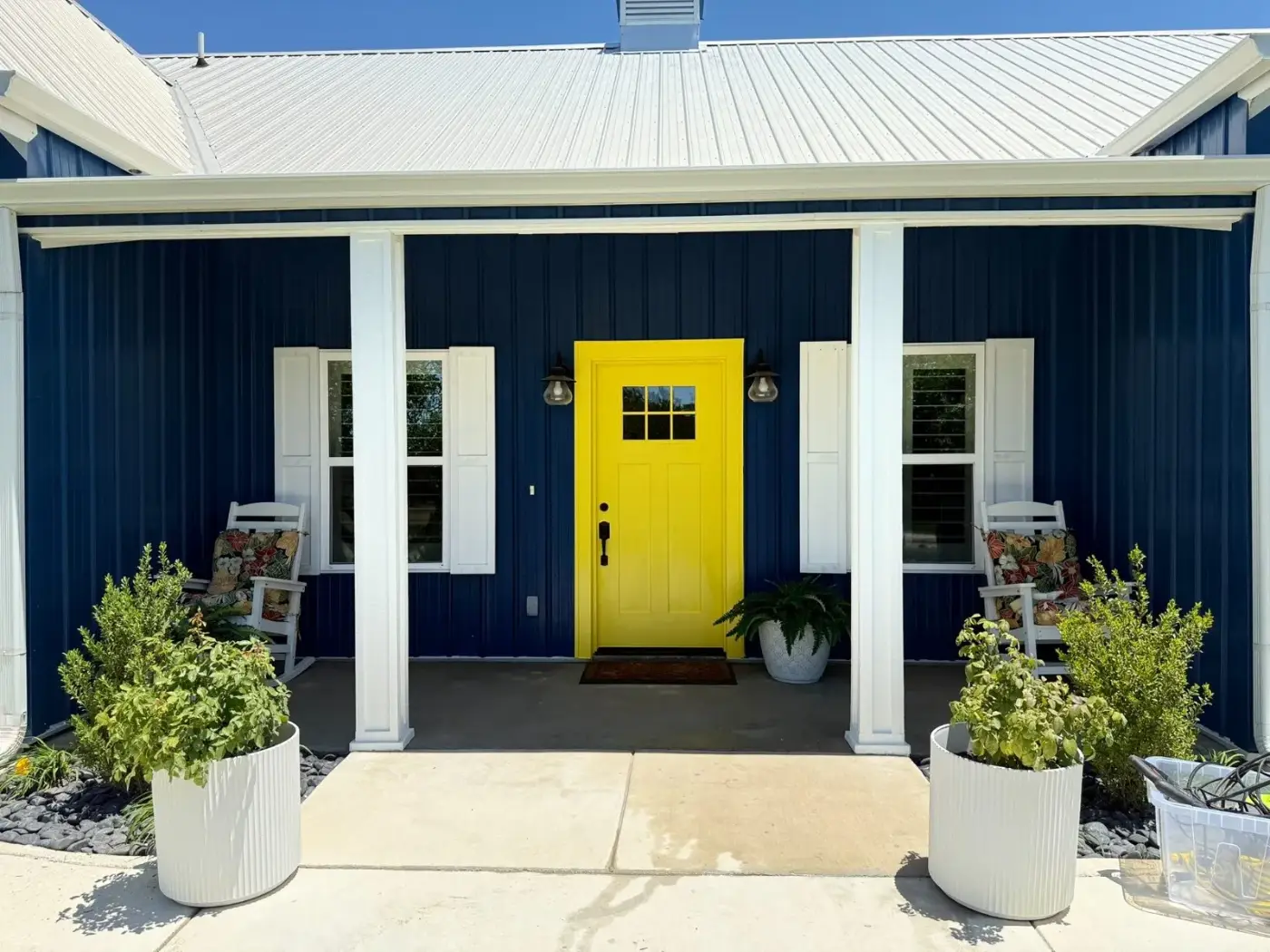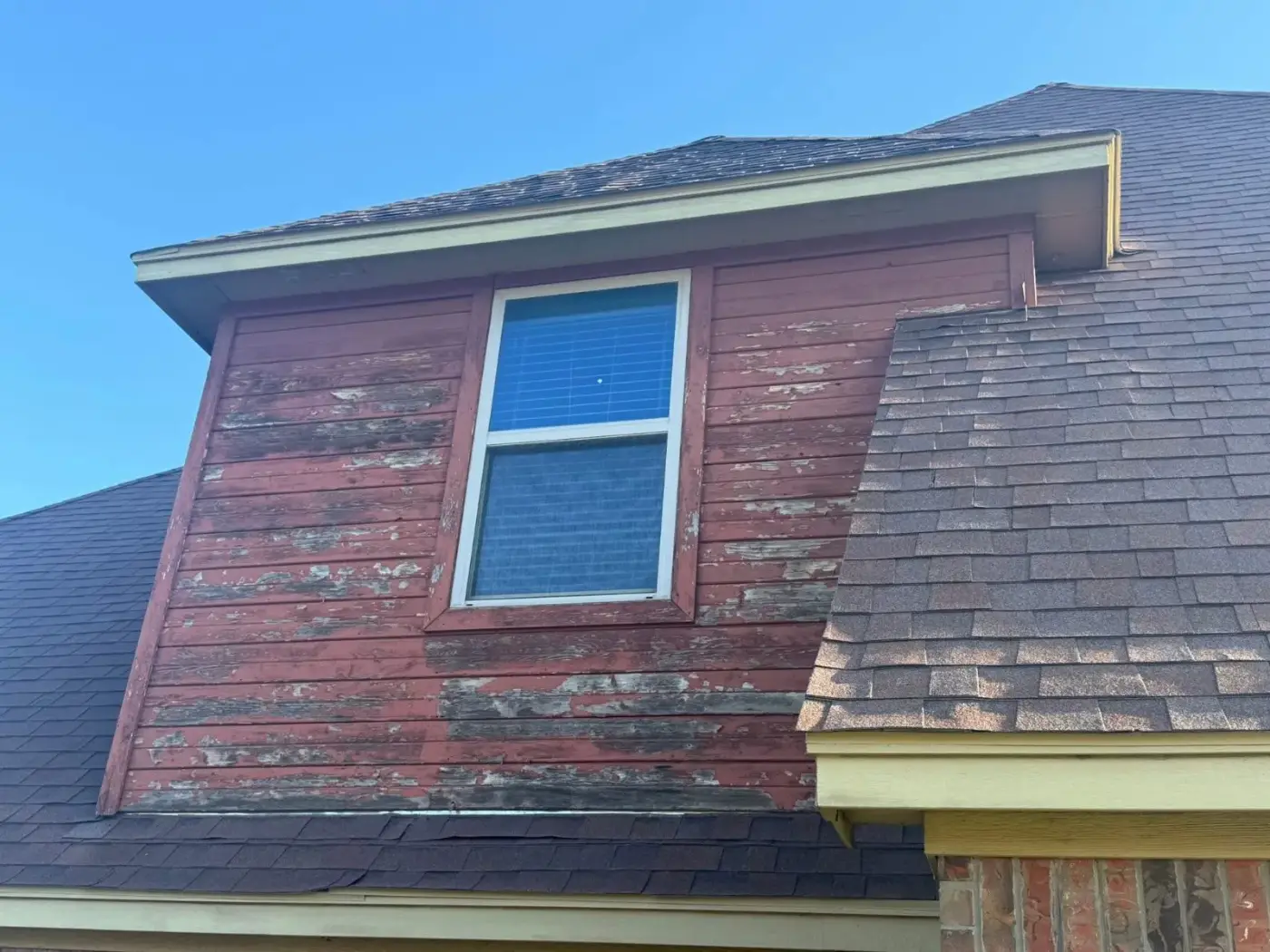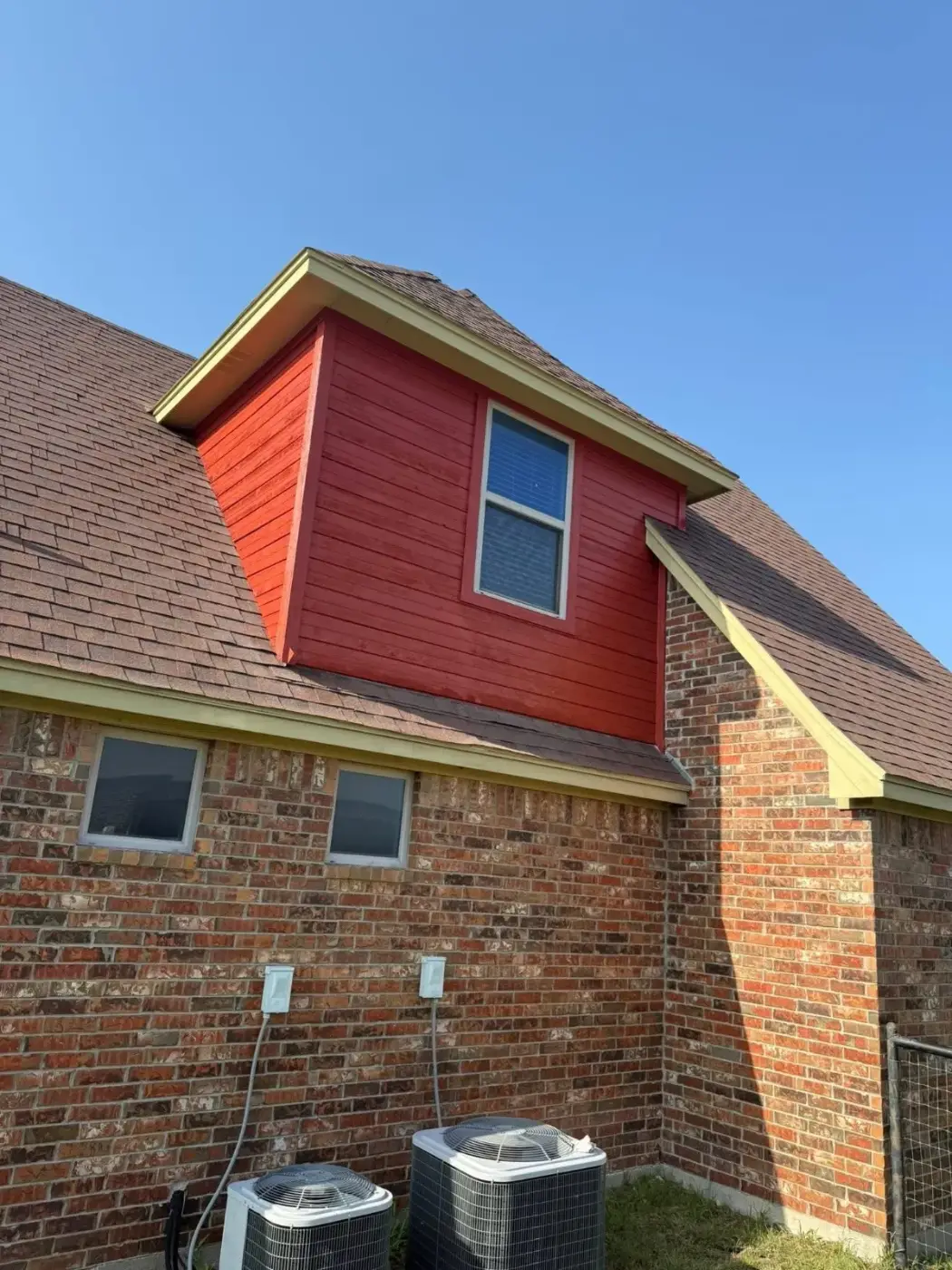
Most people think of exterior paint as a color choice. It's really a protective layer. Paint is what stands between your siding, trim and fascia and the sun, heat, rain, hail and wind that North Texas throws at a house all year. When it's in good shape, it keeps water out, slows UV damage and stops wood and metal from breaking down. When it fails, those materials start to deteriorate, and repairs get expensive.
This post explains what exterior paint actually protects your house from, how it does it, what happens when it fails, and why that protection is worth keeping up in the Fort Worth climate.
What paint protects against
Water
Water is the biggest threat to any house. Paint forms a film that sheds rain and keeps water from soaking into wood, fiber cement and other materials. It also seals the surface of trim and siding edges, where water gets in most easily. Combined with caulk at the joints, paint keeps water outside the wall.
Without that film, wood absorbs water every time it rains. It swells, then shrinks as it dries. Over time it cracks, splits and rots. Water can also get behind siding and into wall cavities, where it causes hidden damage.
Sun and UV
UV light breaks down wood fibers on the surface, turning bare wood gray and rough. It also breaks down many siding materials over time. Paint absorbs and reflects UV, shielding what's underneath. Good exterior paints use pigments and binders made to resist UV, so the paint itself lasts longer in the sun.
Heat
Fort Worth summers regularly top 100 degrees. Light and mid-tone colors reflect more heat, keeping surfaces cooler. Flexible paint stretches as materials expand in the heat and shrink when it cools, so it doesn't crack.
Temperature swings and freezing
Spring and fall can bring 40-degree swings between morning and afternoon, and winter brings occasional hard freezes. Flexible paint and caulk move with the house. When water gets into cracks and freezes, it expands and widens them. Sealed surfaces keep that water out.
Hail and wind
Paint can't stop hail, but a sound coating gives the surface a protective layer. After a storm, chipped paint is a sign to repair quickly before water gets in. Our hail damage guide explains what to do after storms.
Mildew and algae
Many exterior paints include mildew-resistant additives. Shaded walls and areas near sprinklers are less likely to grow mildew on well-maintained paint.
Insects
Bare, damp wood attracts insects like carpenter ants and termites. Sealed, painted wood is much less inviting. Paint isn't pest control, but it helps by keeping wood dry and sound.
Rust
On metal railings, garage doors, gutters and steel siding, paint keeps moisture and oxygen away from the metal, preventing rust. Once paint chips, rust starts quickly and spreads under the paint. See wrought iron and metal painting.
How each part of the house relies on paint
Wood trim and fascia
The most vulnerable parts of most homes. Fascia boards along the roofline catch runoff. Window sills hold water. Bottom edges of trim sit close to the ground. Paint and caulk are what keep them from rotting. See exterior trim painting and soffit and fascia painting.
Wood siding
Needs a continuous paint film to keep water out of the boards. Older Fort Worth homes in neighborhoods like Fairmount and Arlington Heights often have original wood siding that depends on regular repainting.
Fiber cement siding
More durable than wood, but cut edges and nail holes absorb water if they aren't sealed. Paint keeps them protected and maintains the warranty on many products. See siding painting.
Stucco
Stucco is porous. The right coating sheds water and bridges hairline cracks from foundation movement. See stucco painting and repair.
Brick
Unpainted brick doesn't need paint. Painted brick needs a breathable coating that lets moisture escape. The wrong paint can trap water and damage the brick. See brick painting and treatments.
Doors and garage doors
Front doors and garage doors take sun and handling. Paint protects wood from swelling and steel from rust. See door painting and garage door painting.
What happens when paint fails
Paint doesn't fail all at once. It wears down in stages.
The first two stages are a signal to plan a repaint. By the last stage, the job includes repair work. Our post on 5 signs it's time to repaint your exterior walks through each one.
The real cost of failed paint
Paint is much cheaper than the materials it protects. Replacing rotted trim, fascia and siding costs far more than repainting. Water that gets inside walls can damage insulation, framing and drywall, which can cost thousands to fix. Rusted railings may need replacing. Keeping the paint in good shape is the cheaper path every time.
For reference, exterior repaints in Fort Worth start around $3,000, and most homes fall between $4,500 and $12,000 depending on size, surfaces and condition. Homes repainted on time stay toward the lower end for their size.
Protection depends on prep
Paint only protects as well as it's applied. Good protection means:
Our step-by-step exterior prep guide covers each step.
Choosing protective products
For North Texas, we use premium 100% acrylic exterior paints with strong UV resistance and flexibility on most surfaces. On many homes that's Sherwin-Williams Duration or Emerald exterior, or a comparable Benjamin Moore exterior line. Stucco, brick and metal get products made for them. See the best exterior paint for North Texas houses.
Paint and home value
Protection isn't the only benefit. A well-maintained exterior looks cared for, which matters when you sell and when an inspector walks the house. Peeling paint and soft trim often show up on inspection reports as items to repair. Fresh paint in good condition helps a house show well and sell faster. See painting your house before selling.
Keeping the protection going
Between repaints, a little maintenance helps:
See how to extend the life of your paint job.
A closer look at caulk
Caulk deserves its own mention because it's the most overlooked part of an exterior's protection. Paint covers flat surfaces, but caulk seals the gaps between them: around window and door frames, where trim meets siding, at corner boards and along the joints of fiber cement siding. In Fort Worth, those gaps open and close as the house heats and cools and as the clay soil shifts with the seasons.
Cheap or old caulk dries out, shrinks and cracks. Once it does, water runs into the joint every time it rains. We remove failed caulk and replace it with a high-quality, flexible exterior caulk on every repaint. It's a small part of the cost and one of the biggest parts of the protection.
Questions homeowners ask us about protection
Is a fresh coat enough if my paint is peeling?
No. New paint over peeling paint will peel with it. Loose paint has to be scraped back to a sound edge, rough spots sanded and bare areas primed before the new coat goes on.
Can paint fix rotted wood?
No. Paint can protect sound wood, but rotted wood has to be cut out and replaced. Painting over rot hides it for a season while the damage keeps spreading underneath.
Does a thicker coat protect better?
Two proper coats protect better than one thick one. Thick single coats can dry unevenly, wrinkle or crack. Applying paint at the manufacturer's recommended thickness, in two coats, builds a strong, even film.
Does my HOA care about protection or just color?
Mostly color and appearance, but many HOAs also require exteriors to be kept in good repair. Peeling trim or rusted railings can draw a notice.
Our warranty
Every residential exterior paint job we do is covered by our 2-Year Warranty. If paint peels, blisters or chips because of how we prepped or applied it, we come back and fix it, with the labor on us.
Want to make sure your house is protected? Call or text (817) 214-7475, or request a free estimate. See our exterior painting services for more.
Know the warning signs. Learn how North Texas weather damages exterior paint so you can act before damage spreads.
Protect your home with a durable exterior coat. Explore exterior painting or get a free estimate.
Protection depends on the surface; see siding, stucco and metal.
Bearcat Painting is based in Aledo and works with homeowners across Greater Fort Worth, including Burleson, Keller, Colleyville, North Richland Hills and Willow Park. See all areas we serve.