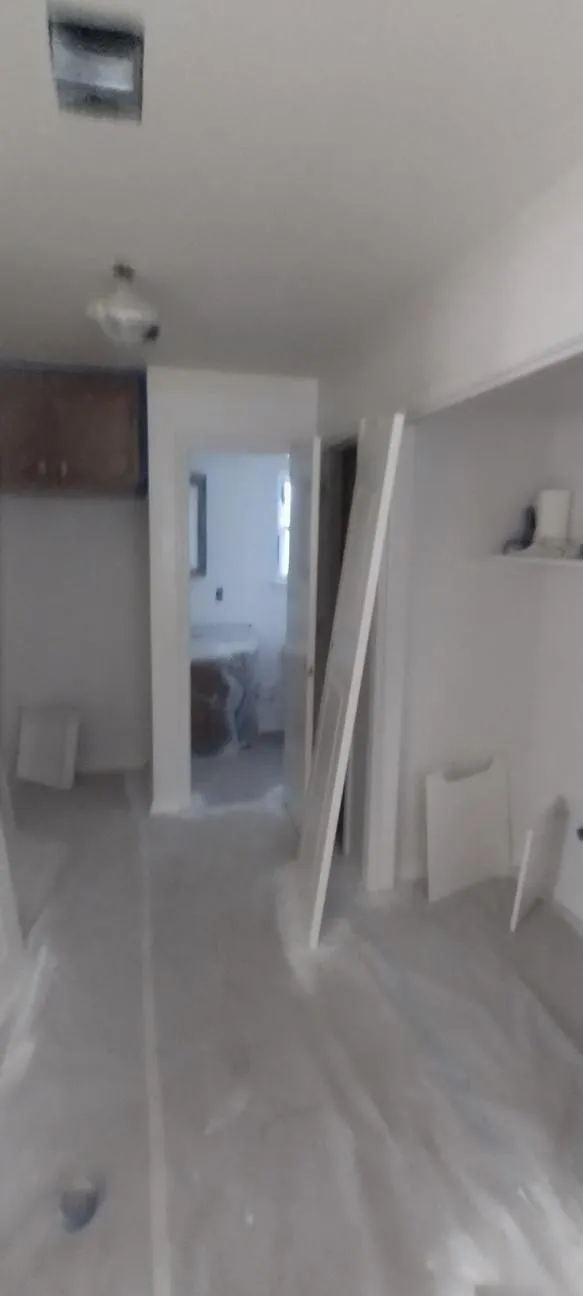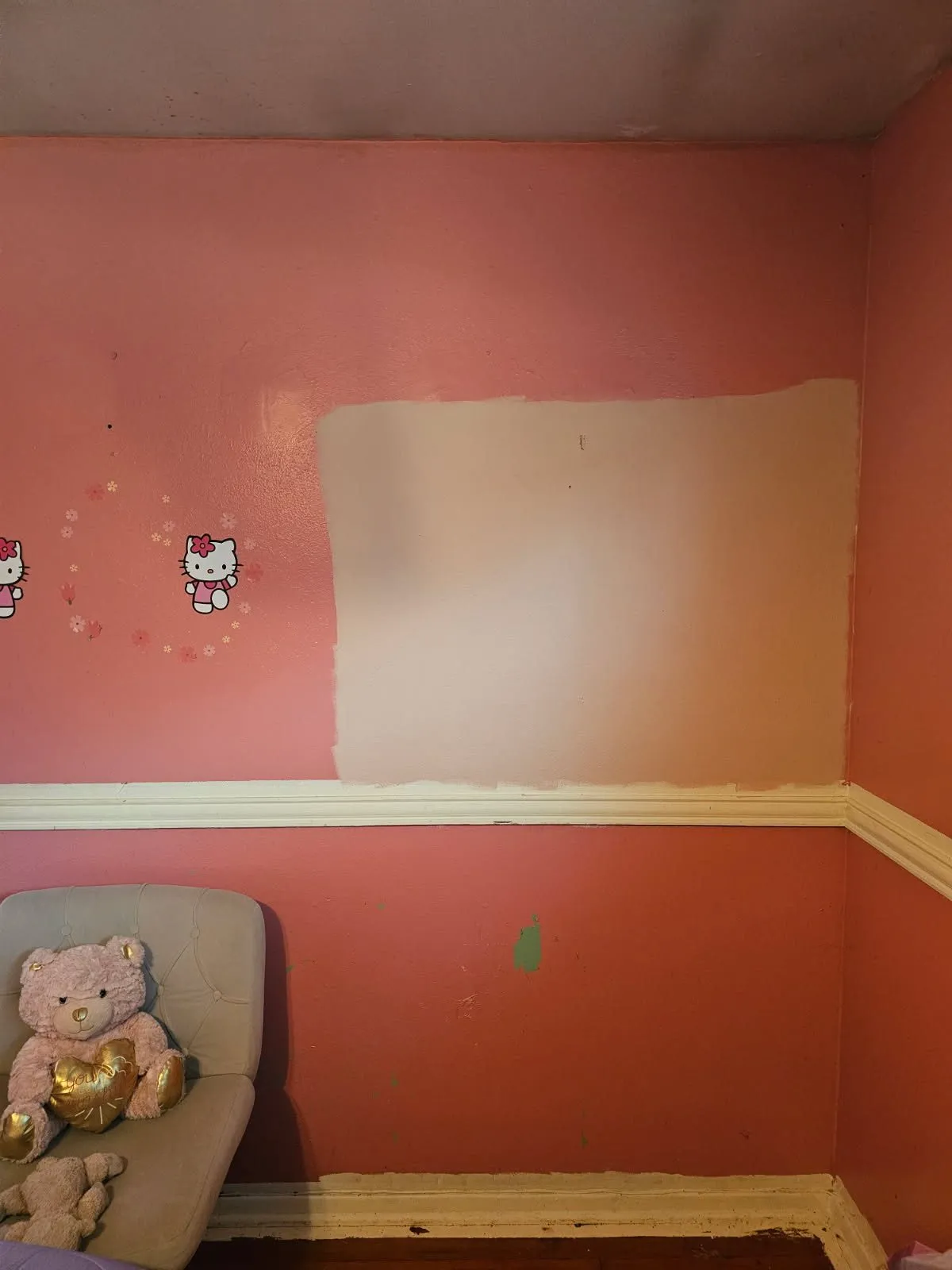
Most of what you see in a finished paint job comes from work done before the paint goes on. When paint peels in a year, when patches show through, when lines look wavy or the wall feels rough, it's almost always a prep problem. Paint is thin. It doesn't hide much. It covers color, but it shows every flaw in the surface underneath, and it only sticks as well as that surface lets it.
This post explains why prep matters so much, what goes wrong when it's skipped and what good prep looks like on a professional job in Fort Worth. If you want a step-by-step how-to, see how to prepare your walls for painting. For exteriors, see our step-by-step exterior prep guide.
Paint shows what's under it
A lot of people expect fresh paint to make a wall look new. It will make it look a new color. But nail holes, dents, cracks, old patches, roller marks from the last job and rough spots all show right through. On satin and semi-gloss, they show even more, because shiny surfaces reflect light off every bump.
That's why the first big reason for prep is appearance. Filled holes, smooth patches and sanded surfaces are what make a wall look flat and even after painting.
Paint only sticks to what it's touching
Paint bonds to the surface directly under it. If that surface is dirty, greasy, glossy, chalky or loose, the new paint is only as strong as that layer.
Dirt and grease
Paint over dust, hand oils or cooking grease doesn't bond well. In kitchens especially, paint over grease can peel or stay soft and sticky.
Glossy paint
New paint struggles to grip a glossy surface. Without scuff-sanding or a bonding primer, it can scratch off with a fingernail.
Loose or peeling paint
Painting over peeling paint glues the new coat to something that's already letting go. The new paint peels with it.
Chalky paint
On exteriors, old paint breaks down into a powdery chalk. Paint over chalk doesn't bond.
Moisture
Paint over a damp surface or a moisture problem blisters and peels.
What happens when prep is skipped
These are the failures we see most when we're called in to fix a previous job.
Peeling
Paint lifting in strips or sheets, often in bathrooms, kitchens or on trim. Usually from paint over grease, gloss, moisture or loose paint.
Flashing
Dull or shiny patches where repairs were made, because spackle wasn't primed. The color is right, but the sheen doesn't match.
Bleed-through
Water stains, smoke, marker or wood knots showing through the new paint, sometimes weeks later. That happens when stains aren't sealed with a stain-blocking primer.
Cracking at corners
Cracks reappearing at corners and above doors because rigid spackle was used where the wall moves. Common in Fort Worth homes because of foundation movement.
Rough or gritty walls
Paint applied over sanding dust or debris.
Wavy lines
Sloppy edges where walls meet ceilings or trim, often because caulk gaps weren't filled first, leaving the painter with an uneven edge to follow.
Paint that won't clean
Walls painted without priming patches or over dirty surfaces often have uneven sheen and absorb dirt unevenly.
Why prep takes the time it does
On a typical interior job, prep can take as much time as painting. Homeowners are sometimes surprised by that. Here's what it includes:
Each step is simple. Together, they take hours per room. Cutting any of them saves time today and shows up as a problem later.
Interior prep in Fort Worth homes
A few prep issues come up often in Fort Worth.
Foundation movement cracks
Expansive clay soil shifts foundations slightly, which shows up as hairline cracks at corners, above doors and where walls meet ceilings. Rigid spackle cracks again. We use flexible products and re-tape joints when needed.
Texture matching
Many homes around Fort Worth have orange peel or knockdown texture. Patches need to be textured to match, or they stand out even after painting.
Older homes with oil-based trim
Homes from the 1990s and earlier often have oil-based paint on trim and doors. Latex over oil peels unless the surface is sanded and primed with a bonding primer. A quick test with rubbing alcohol tells us which we're dealing with.
Lead paint in older homes
Homes built before 1978, common in neighborhoods like Fairmount, Arlington Heights and the TCU area, may have lead paint under newer layers. That requires lead-safe prep.
Water stains
Ceilings and upper walls often have water stains from past roof or plumbing leaks. They need stain-blocking primer.
Exterior prep matters even more
Outside, prep is even more important because paint has to survive sun, heat, rain and hail. Exterior prep includes washing, scraping, sanding, repairing rot, caulking every joint and priming bare wood and metal. Skipping any of it shortens paint life by years. See exterior painting that holds up to Fort Worth weather.
Do walls always need primer?
Not always. Clean, sound, previously painted walls in the same color family often don't need a full primer coat. Spot-priming patches and stains is usually enough. A full primer coat is needed on:
How to tell if a painter is doing good prep
When you're comparing quotes or watching a crew work, look for these signs.
If a quote is much lower than others, the difference is often prep.
What good prep gets you
It's also what lets us stand behind our work. Residential interior and exterior painting is covered by our 2-Year Warranty. If paint peels, blisters or chips because of how we prepped or applied it, we fix it, with the labor on us.
What it costs
Prep is built into every estimate we write. Interior painting in Greater Fort Worth typically runs about $2 to $6 per square foot of floor area, done in 1 to 5 days for most homes. Rooms with more repairs land higher in the range. Larger drywall repairs are listed separately. See drywall patching.
Prep for different kinds of walls
Not every wall needs the same amount of prep. Here's how it usually breaks down in Fort Worth homes.
When we write an estimate, we look at your walls and plan prep for what's actually there. That's why two rooms of the same size can have different prices.
A real-world comparison
Picture two painters quoting the same three bedrooms. The first quote is lower and says "paint walls and trim, two coats." The second lists cleaning, patching, caulking, spot-priming and two finish coats with the product names. The first crew might finish a day sooner. Six months later, patches show through in the hallway light, the bathroom ceiling is peeling near the vent and the caulk lines along the baseboards have pulled away. The second job looks the same as the day it was finished.
The difference in price is usually a few hundred dollars. The difference in how long the paint looks good is years. That's the case for prep in one example.
Want a paint job that lasts? Call or text (817) 214-7475, or request a free estimate. See our interior painting page for more.
Prep often means drywall patching, wallpaper removal or popcorn ceiling removal before any paint goes on.
Want a professional opinion? Bearcat Painting offers free, written estimates across Greater Fort Worth. Schedule yours online or call (817) 214-7475.
Bearcat Painting is based in Aledo and works with homeowners across Greater Fort Worth, including Willow Park, Benbrook, Hudson Oaks, Southlake and Granbury. See all areas we serve.