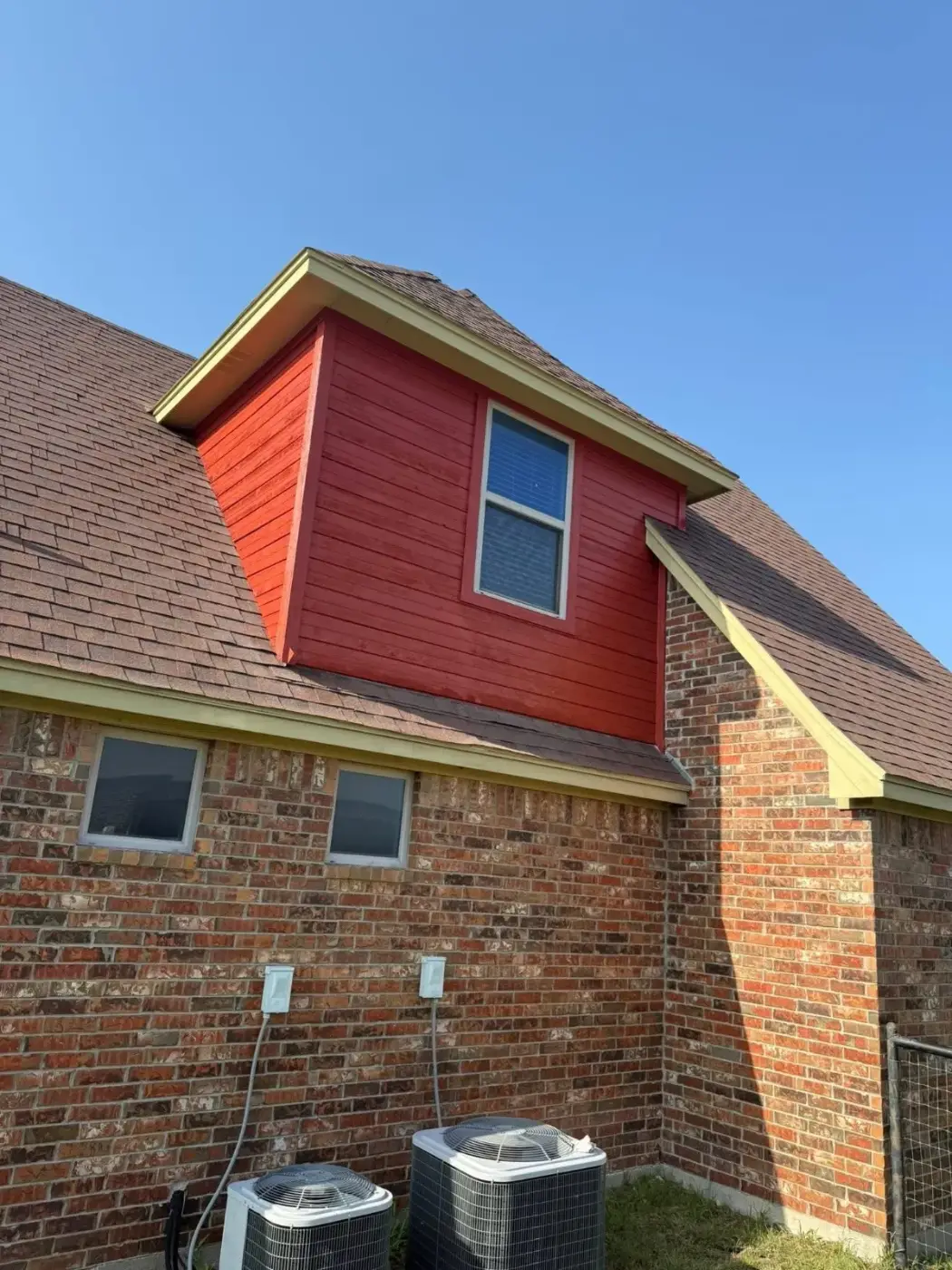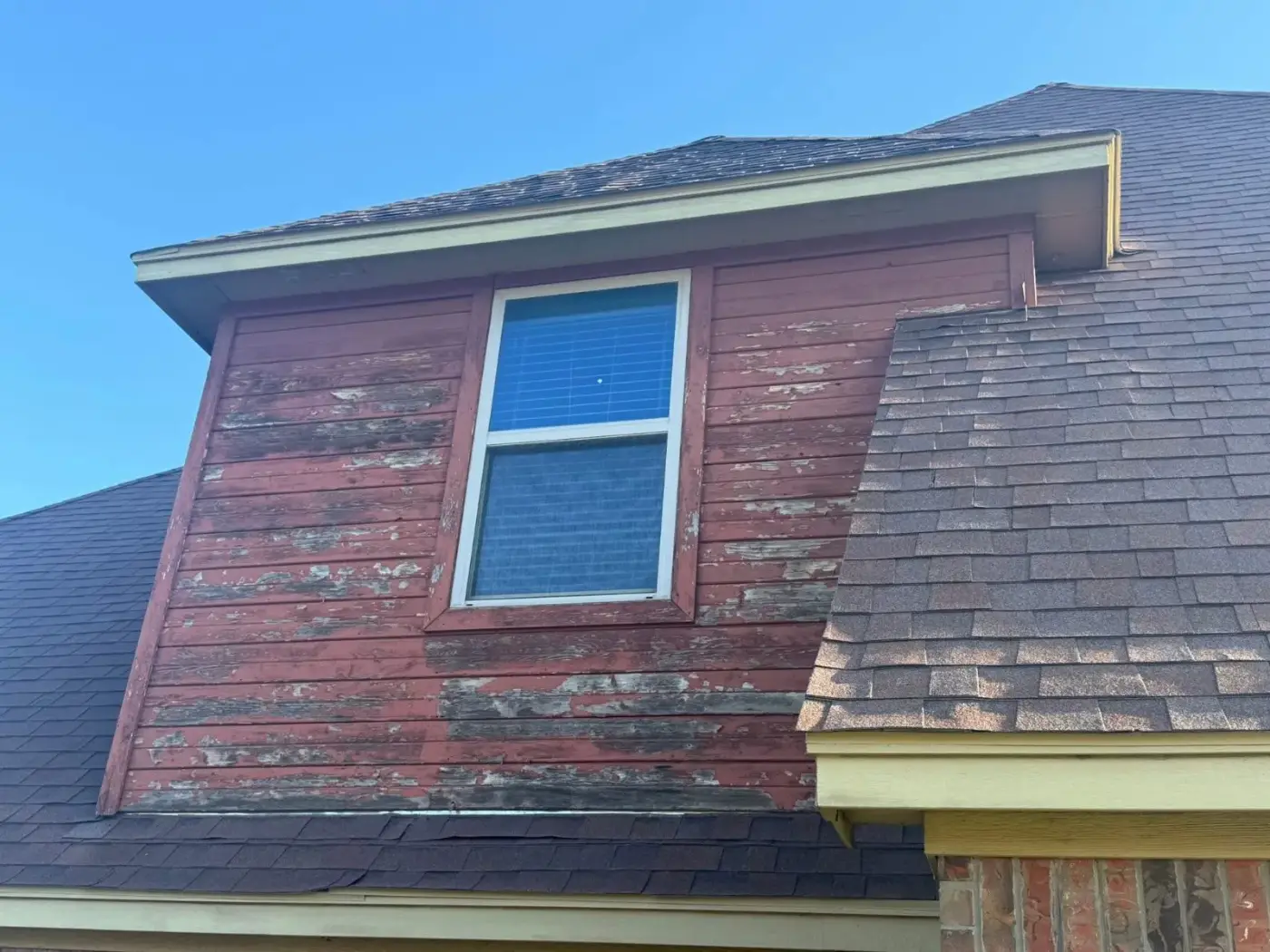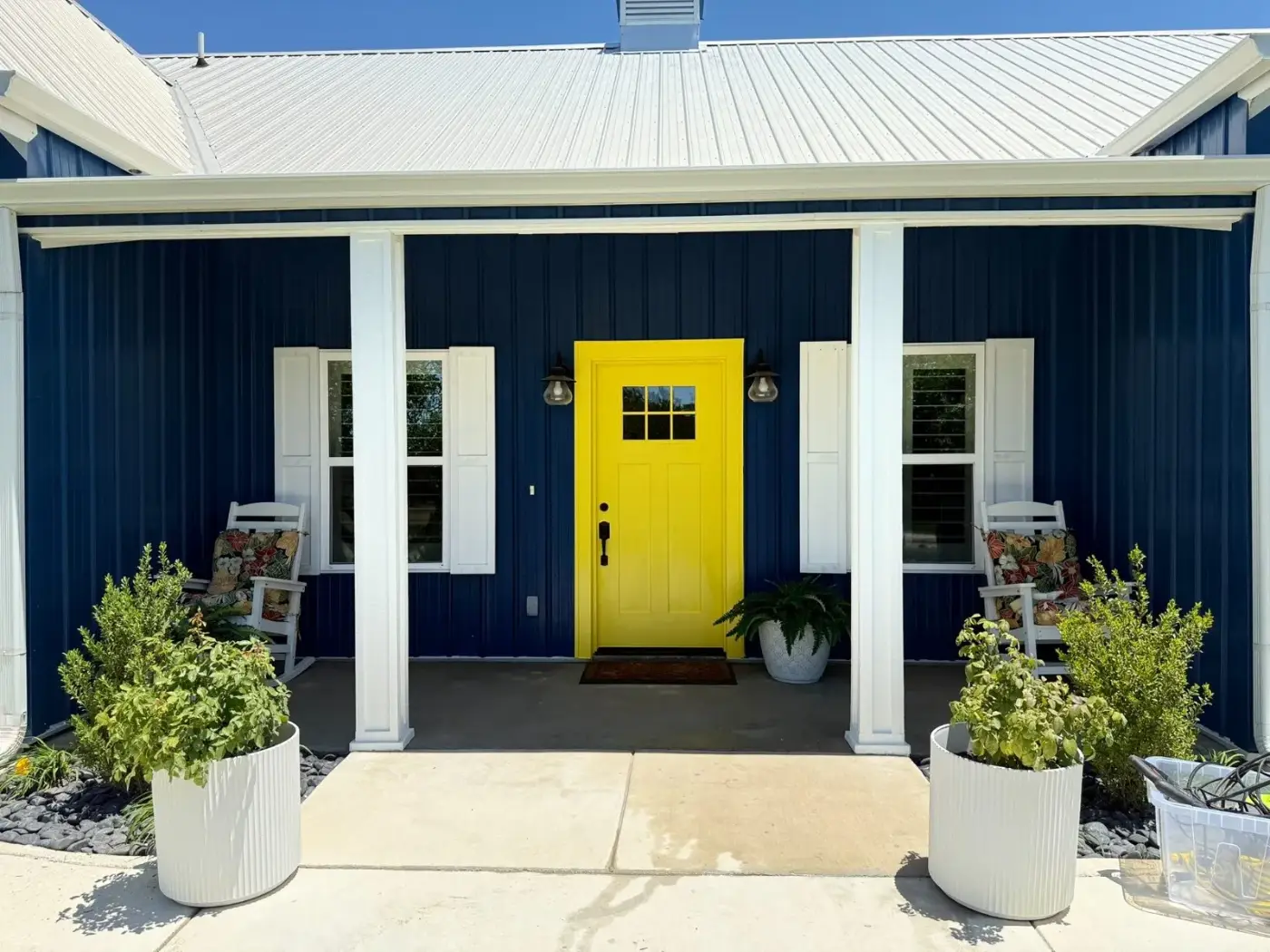
Homeowners often ask whether we'll spray their house or brush and roll it. It's a fair question. Some people have heard that spraying is faster but thinner. Others have heard that brushing is better but takes forever. The truth is that most good exterior jobs use both, and the right method depends on the surface, the weather and the details of your house.
This post explains how spraying, brushing and rolling each work, what each does well, where each falls short and how we decide which method to use on Fort Worth homes.
The three methods
Spraying
An airless sprayer pumps paint at high pressure through a small tip, turning it into a fine spray. It covers large areas quickly and gets paint into textured surfaces and tight spots.
Brushing
Paint applied with a brush. Slow, but precise, and it works paint into cracks, grain and edges.
Rolling
Paint applied with a roller. Faster than brushing on flat areas. Leaves a light stipple texture.
Back-rolling and back-brushing
A hybrid: paint is sprayed on, then immediately rolled or brushed while still wet. This works the paint into the surface and evens out the film.
Spraying: pros and cons
Pros
Cons
Brushing: pros and cons
Pros
Cons
Rolling: pros and cons
Pros
Cons
Back-rolling and back-brushing
This is often the best of both worlds. A painter sprays a section, and a second painter immediately rolls or brushes it while it's wet. The spray gets paint into every nook quickly. The roller or brush works it into the surface and evens out the film.
Back-rolling is especially useful on:
Many paint manufacturers recommend back-rolling on porous or textured surfaces.
Which method for which surface
On a typical Fort Worth home, we usually use a combination.
Siding
See siding painting.
Stucco
Spray and back-roll. Texture needs the spray, and adhesion needs the roller. See stucco painting and repair.
Brick
Spray with back-rolling or brushing, depending on the coating. Limewash is usually brushed. See brick painting and treatments.
Trim, fascia and window frames
Mostly brush for clean lines and control. See exterior trim painting.
Soffits
Often sprayed, since they're overhead and vented soffits are hard to brush. See soffit and fascia painting.
Front doors
Brushed or sprayed, depending on the door. Many front doors look best sprayed for a smooth finish, but that may mean removing the door. See door painting.
Garage doors
Usually sprayed or rolled for even coverage, with brushing on edges. See garage door painting.
Railings and wrought iron
Often sprayed for even coverage on detailed metal, with brushing for touch-ups. See wrought iron and metal painting.
Fences and decks
Stain is often sprayed and back-brushed to work it into the wood. See fence staining.
Weather and spraying in North Texas
Wind is the biggest factor. North Texas gets plenty of windy days, especially in spring. We don't spray when wind would carry overspray onto cars, roofs or neighbors. On windy days, we switch to brushing and rolling or work on sheltered sides of the house.
Heat matters too. Sprayed paint dries faster in hot weather, which can cause dry spray, a rough texture where paint dries in the air before it lands. In summer, we spray early in the day and in the shade.
What matters more than the method
How paint goes on matters less than:
A brushed job over poor prep fails just as fast as a sprayed one. A well-prepped, sprayed and back-rolled job can last as long as a fully brushed one. Our post on exterior painting that holds up to Fort Worth weather explains more.
Questions to ask your painter
Spraying near neighbors
In tight neighborhoods with houses close together, overspray is a real concern. On narrow side yards common in many Fort Worth subdivisions, we often brush and roll the walls closest to the neighbor's house, or use shields and lower-pressure tips to control drift. We also move cars and cover anything nearby before spraying. If your neighbor's car or fence is close, let us know at the estimate so we can plan.
What a well-sprayed job looks like
If your house is being sprayed, here's what a good job looks like up close. The paint film should be even, with no thin spots where the underlying color shows through. There shouldn't be runs or sags, which happen when too much paint goes on in one pass. Edges and trim lines should be crisp, usually because they were brushed by hand or carefully masked. Windows, roof shingles, light fixtures and the ground should be free of overspray. And on textured surfaces like stucco, every low spot should be covered.
Poor spraying shows up as a gritty, rough feel from dry spray, thin coats that fade quickly, misty overspray on glass and a patchy look in raking light. If you see that, ask your painter to address it before the job is finished.
Interior spraying
The same methods apply indoors. Most interior walls are rolled and cut in by brush. Spraying is common on new construction, empty homes, ceilings, trim and doors, and cabinets. Sprayed cabinets and doors get a smooth, factory-like finish that's hard to match by hand. See kitchen cabinet painting. Spraying furnished rooms takes extensive masking, so rolling and brushing is usually more practical when you're living in the house.
Our default approach
On most Fort Worth exteriors, we spray and back-roll the body, brush the trim and cut lines, and choose the method for doors, railings and soffits one at a time.
Does spraying save money?
Sometimes. Spraying is faster, which can lower labor on large, simple surfaces. But masking takes time, more paint is used and back-rolling adds labor back. On most homes, the cost difference between methods is smaller than people expect. We choose the method that gives the best result for each surface.
For reference, exterior repaints in Fort Worth start around $3,000, and most homes fall between $4,500 and $12,000 depending on size, surfaces and condition.
Every residential exterior job comes with our 2-Year Warranty. Call or text (817) 214-7475, or request a free estimate. See our exterior painting services for more.
Method matters, but prep matters more. Even the best spray job fails without proper cleaning, scraping, and priming first.
Want a durable exterior finish done right? See our exterior painting services or get a free estimate.
Spraying suits large, flat siding and garage doors; brushing suits detailed trim.
Bearcat Painting is based in Aledo and works with homeowners across Greater Fort Worth, including Fort Worth, Aledo, Keller, Burleson and North Richland Hills. See all areas we serve.