The paint is the last thing that goes on your house, and it's the part everyone notices. But on a good exterior job, most of the work happens before it. Washing, scraping, repairing, caulking and priming are what decide whether the paint lasts four years or ten in North Texas.
This guide walks through exterior prep step by step, the way our crews do it on Fort Worth homes. It explains what happens at each stage, why it matters and what you can do as a homeowner to help. If you're preparing your house before the crew arrives, our paint prep checklist covers the homeowner side.
Step 1: Walk the house and plan
Every exterior job starts with a walkaround. We look at each side of the house and note:
This becomes the plan for prep and repairs. It's also what goes into the written estimate, so you know what's included before work starts.
Step 2: Protect what's not being painted
Before washing or scraping, we protect plants, walkways, driveways, decks, AC units, light fixtures and windows. Drop cloths go on the ground. Plants close to the house get covered or tied back. Windows and doors that aren't being painted get masked later, before painting.
Step 3: Wash
Paint can't bond to dirt, pollen, chalk or mildew. Washing is the foundation of exterior prep.
After washing, the house needs to dry. In Fort Worth, that's usually a day, sometimes more on shaded walls or wood that soaked up water. Painting over damp surfaces leads to blistering and peeling. See pressure washing.
Step 4: Scrape loose paint
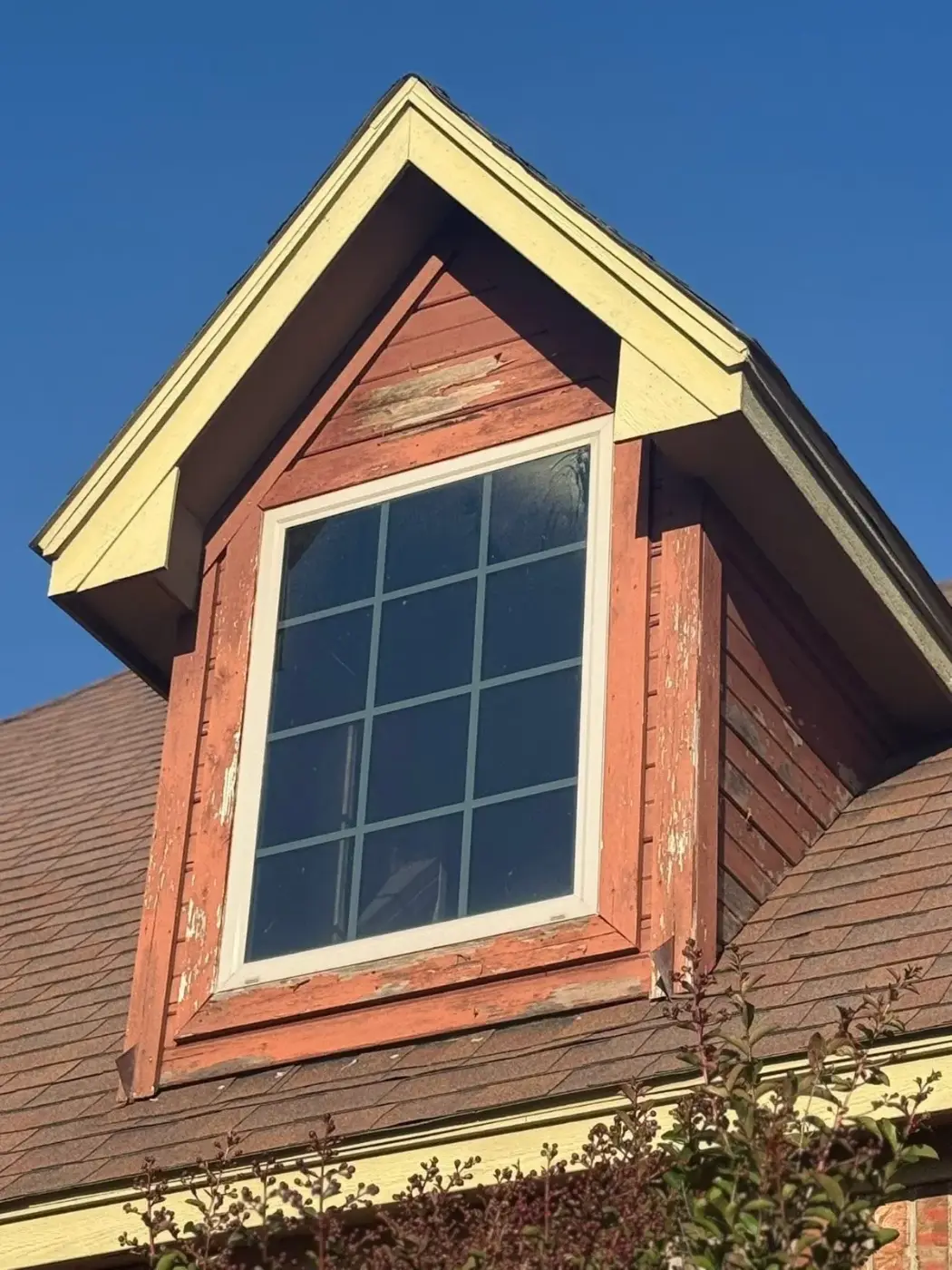
Any paint that's peeling, flaking or lifting comes off. We scrape back to a sound edge, where the remaining paint is firmly attached. On older homes with many layers of paint, this can take time.
On homes built before 1978, we test for lead paint and follow lead-safe practices when scraping, including containing debris and avoiding dry sanding. Many homes in older Fort Worth neighborhoods like Fairmount, Ryan Place and Arlington Heights fall in this range.
Step 5: Sand
Scraped edges leave a ridge where old paint meets bare surface. Sanding feathers those edges so the new paint lies flat and the edges don't show through. We also scuff-sand glossy surfaces like old trim and doors so the new paint grips.
Step 6: Repair
Paint can't fix damage. Repairs come before any primer or paint.
Rotted wood
Soft, crumbly wood on trim, fascia, window sills and siding gets cut out and replaced. Small areas can sometimes be repaired with epoxy wood filler. Painting over rot hides it for a season while it keeps spreading.
Stucco cracks
Cracks are cleaned out and patched with a material made for stucco. Larger cracks may need more work. See stucco painting and repair.
Brick and mortar
Loose mortar is noted and repaired before painting or coating. See brick painting and treatments.
Nail heads and holes
Popped nails get set, and holes get filled with exterior filler.
Metal
Rust is removed with wire brushes or sanders down to sound metal. See wrought iron and metal painting.
Step 7: Caulk
Caulk seals the joints where water gets in: around windows and doors, where trim meets siding, at corner boards, along siding seams and around penetrations like hose bibs and light fixtures.
We remove old, cracked caulk and apply a high-quality, flexible, paintable exterior caulk. In North Texas, flexibility matters because joints move with daily heat and seasonal soil movement. Cheap caulk shrinks and cracks within a year or two.
Some joints should not be caulked. The bottom edge of lap siding needs to stay open so moisture can escape, and so do weep holes in brick.
Step 8: Prime
Primer gives paint something to grip and seals surfaces that would otherwise absorb paint unevenly or bleed through.
Primer needs to dry according to the label before painting.
Step 9: Mask
Windows, doors, light fixtures, hardware and anything else not being painted get masked with tape and plastic or paper. Careful masking means clean lines and no overspray.
Step 10: Final check
Before paint goes on, we walk the house one more time. Every repair is checked, every joint is sealed and every bare spot is primed. Missed spots are much harder to fix after painting.
Then the painting starts
With prep done, we apply two coats of premium exterior paint: siding first, then trim, doors and accents. We follow the shade around the house in summer so paint never goes onto a hot wall in direct sun. See when is the best time to paint a house exterior in North Texas.
How long prep takes
On a typical one-story Fort Worth home, washing and drying take about a day. Scraping, sanding, repairs, caulking and priming take another one to three days, depending on condition. Homes with lots of peeling, rot or multiple stories take longer. A full exterior job, prep plus paint, usually takes about a week.
What you can do to help
Why prep matters so much in North Texas
Our climate puts paint through a lot: UV, heat over 100 degrees, spring hail, temperature swings and soil movement. Paint over dirty, loose or unsealed surfaces fails fast under those conditions. Thorough prep is the difference between a paint job that lasts and one that doesn't. Our post on exterior painting that holds up to Fort Worth weather explains more.
What it costs
Prep is included in every exterior estimate we write. Exterior repaints in Fort Worth start around $3,000, and most homes fall between $4,500 and $12,000 depending on size, surfaces and condition. Repairs like rotted wood replacement are listed on the estimate so you can see each piece.
Every residential exterior job is covered by our 2-Year Warranty. If paint peels, blisters or chips because of how we prepped or applied it, we fix it, with the labor on us.
Questions to ask about prep
A note on fences, decks and outbuildings
If you're having fences, decks, a shed or a pergola done at the same time, they get their own prep. Wood is cleaned and sometimes brightened, loose boards and nails are fixed and the wood has to dry fully before stain goes on. See fence staining and deck staining.
Prep on different house styles around Fort Worth
Prep changes with the house. On a newer two-story in Walsh or north Fort Worth with fiber cement and brick, prep is mostly washing, caulking siding seams and trim, and spot-priming. It goes quickly. On a 1920s bungalow in Fairmount with original wood siding and decades of paint, prep can take as long as painting: careful scraping under lead-safe rules, sanding, replacing a few soft boards and priming large areas of bare wood. Stucco homes in Rivercrest or Westover Hills need crack repair and the right masonry primer. Rural homes in Parker County often have more wood trim and fascia exposed to full sun, so rot repair comes up more. We plan prep around the house in front of us, not a generic checklist.
Ready to get started? Call or text (817) 214-7475, or request a free estimate. See our exterior painting services for more.
Prep is where quality lives. A beautiful finish over poor prep won't survive a Texas summer. This is the stage professionals never rush.
Let Bearcat handle it end to end. See exterior painting services or book a free estimate.
The first step is almost always pressure washing, followed by repairs to trim and stucco.
Bearcat Painting is based in Aledo and works with homeowners across Greater Fort Worth, including Willow Park, Benbrook, Hudson Oaks, Southlake and Granbury. See all areas we serve.